Start With the Temperature Gauge
We get a lot of no heat calls the first cold week of the year in Milwaukee. Most people open with a guess they read online, usually the heater core. Most of the time it is something cheaper. The fastest way to sort it out is the gauge you already have on the dash.
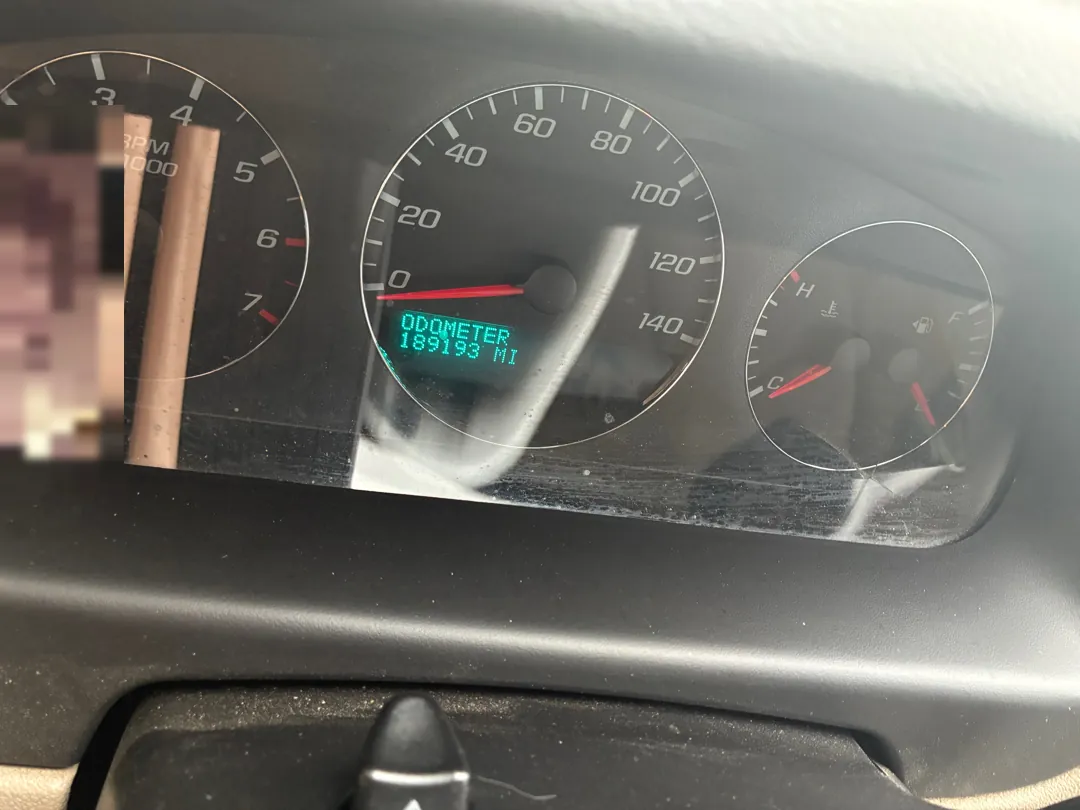
Drive 15 minutes, highway if you can. Then look at the coolant temperature needle and find your row.
| What you see | Most likely cause | Job size |
|---|---|---|
| Gauge stays low or takes forever to climb | Thermostat stuck open | Small to medium |
| Gauge normal, heat only when driving, cold at idle | Low coolant or an air pocket. Sometimes a weak water pump | Small, unless there is a leak to find |
| Gauge normal, one heater hose hot and one cool | Coolant not flowing through the heater core | Medium, can be large |
| Gauge normal, both heater hoses hot | Blend door or its motor | Small to large, by car |
| Warm on one side, cold on the other | One blend door motor on a dual zone system | Small to large, by car |
| Gauge climbing toward hot and no heat | Very low coolant or no flow. Stop driving | Find out before it gets bigger |
| No air at all, or only on high | Blower motor, its resistor or a fuse. Not a heat problem | Small |
That last row matters. If no air moves, the heat may be fine. The fan just is not pushing it. Everything else on this page is about air that moves but comes out cold.
The Two Hose Test
Your heater core is a small radiator behind the dash. Two rubber hoses carry hot coolant in and out of it. They usually run from the engine to the firewall, the wall between the engine and your feet. Feeling those two hoses tells you more than any list of causes.
Warm the engine fully. Set the heat to full hot and the fan on high. Then carefully touch both hoses near the firewall, or point a cheap infrared thermometer at them.
GM gives technicians a number for this. Its service bulletin in TechLink (April 15, 2020) says the heater core inlet and outlet usually read within 10 to 20°F of each other. In the restricted case it describes, the inlet read 147°F and the outlet only 82°F. The cause on those trucks was a kinked hose hidden under a cover, not the core itself.
The two hose test, in degrees F
Dark bar is the hose going into the heater core. Light bar is the hose coming out.
Flowing, gap of 10 to 20 degrees
Restricted, GM's example
Here is how to read what you feel.
- Both hoses hot. Hot coolant is going through the core. The heat is there. Something behind the dash is keeping it from you, almost always the blend door.
- Inlet hot, outlet cool. Coolant reaches the core but does not flow through it. Think air pocket, a kinked hose or a core plugged with scale.
- Both hoses only warm. The engine itself is not hot enough, or coolant is low. Go back to the gauge and the coolant level.
One safety line. Never open the radiator cap or the coolant tank on a hot engine. The system is under pressure, and hot coolant can spray. Check the level cold, first thing in the morning.
Seven Causes, Cheapest First
Every top result on this question lists about the same causes. None of them puts them in the order you should check them. Here they are by cost to rule out.
1. Low coolant. The most common cause, and the cheapest to check. When the level drops, the heater core is often one of the first places to run short, because it often sits high and far from the pump. That is why heat often goes cold at a red light and comes back when you drive. Topping it off is not the fix, though. Coolant does not get used up. If it is low, it went somewhere, and that leak is the real job.
2. Air in the system. After a leak, a hose job or a top off, air can get trapped in the heater core. The heat comes and goes. Bleeding the air out is a small job when it is done right, with the heat on full and the right bleed point for that engine.
3. Thermostat stuck open. The thermostat holds coolant in the engine until it warms up. Stuck open, coolant runs to the radiator from the start, and on a cold day the engine never gets fully warm. You see a low gauge and lukewarm air. On many newer cars this also sets code P0128. Kelley Blue Book describes that code as coolant that stays below the temperature the thermostat should hold, and it lists a heater that does not work as it should among the signs. A bad temperature sensor or a fan stuck on can set the same code, so scan it before you buy the part.
4. Blend door or blend door motor. Behind the dash, a door decides how much air goes through the heater core and how much goes around it. On most newer cars a small electric motor moves it. When that motor fails, or its plastic gears strip, the door can stick on cold. A clicking or ticking sound behind the dash when you change the temperature is a strong clue. This is the most common answer when both hoses are hot.
5. Heater core plugged or leaking. Old coolant leaves scale, and the tiny passages in the core clog. A leaking core gives itself away with a sweet smell in the cabin, a damp passenger floor or a greasy film on the inside of the windshield. A flush sometimes clears a partly plugged core. A leaking one gets replaced, and on many cars that means taking the dash out.
6. Water pump. A pump with a worn impeller moves enough coolant to keep the engine cool on the highway but not enough for good heat at idle. It usually shows up with other signs, like a leak at the pump or a gauge that creeps up in traffic.
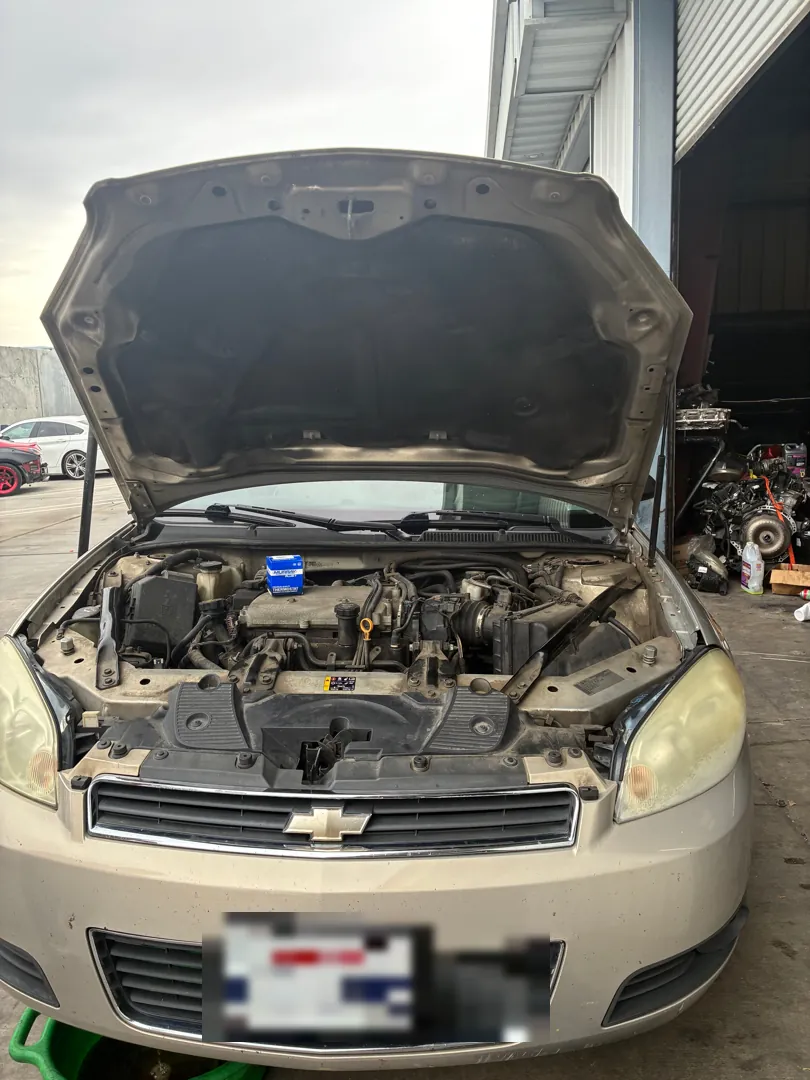
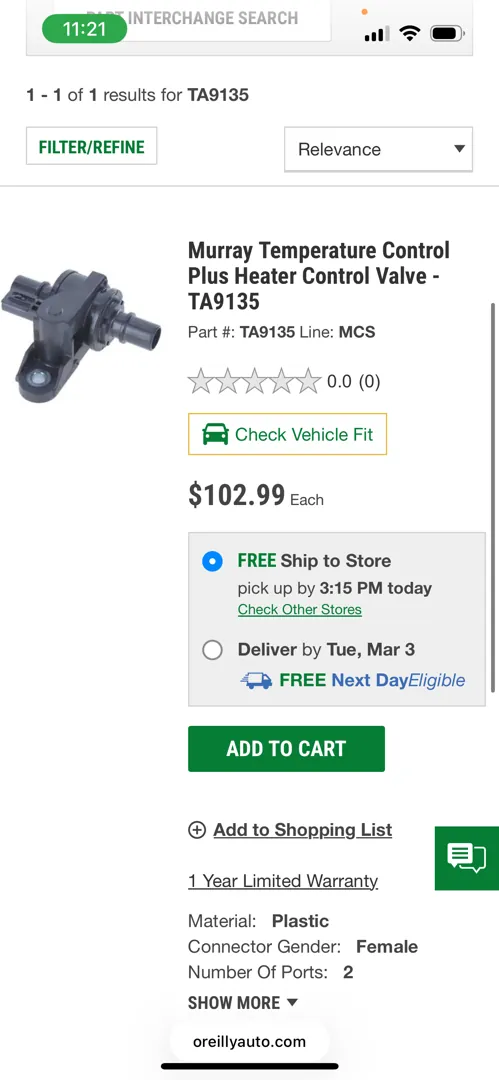
7. Heater control valve. Many older cars and some trucks have a valve in the heater hose that opens and closes coolant flow to the core. When it sticks closed, you get the inlet hot, outlet cool pattern from the hose test.
Why It Shows Up in Milwaukee in November
A weak heater hides all summer. The first cold mornings find it. The normal November low at Mitchell Airport is 33.1°F, and by January the normal low is 17.2°F, per the NOAA 1991 to 2020 normals in the Milwaukee climate table. The coldest night of a typical January drops to about −4.5°F.
Cold makes every weak part worse. A thermostat that leaks a little can still warm the engine in October. In January, cold air through the radiator pulls the heat out faster than the engine makes it. Short trips make it worse again. The U.S. Department of Energy's fueleconomy.gov cold weather page notes that in cold weather an engine takes longer to reach its best operating temperature, and that this hits short trips hardest. A car that only drives two miles to work may never get there.
Hybrids add a twist. The same page says a hybrid's fuel economy can drop about 30 to 34 percent in the cold, about twice the 15 percent hit it gives for a regular gas car. Most hybrids still make cabin heat from engine coolant, so the engine may run more often in winter just to keep you warm. Heat that goes cool when the engine shuts off at a light can be normal on a hybrid, not a fault.
And here this is more than comfort. Wisconsin rule Trans 305.33 says every car made after January 1, 1955 needs a defroster that can clear condensation and frost from the windshield. The defroster is the heater. A car with no heat in a Milwaukee winter is a car with a windshield that will not clear.
What a Cold Heater Costs to Fix
Prices online for this are a mess. The most linked page on the topic gives two different price ranges for the same job in its own table and text. So here is what we actually know.
First, our own numbers. Across our wider mechanic network, 48 paid cooling system repairs from August 2025 to October 2026 had a median of $443 before tax, and the middle half landed between $197 and $703. Most of the network's jobs are in Southern California, so Milwaukee labor will differ. The category covers cooling system work in general, not only heater repairs.
Second, the spread is all about which cause you have.
- Coolant top off, bleed or a hose clamp. The low end, if the leak is simple.
- Thermostat or a blend door motor you can reach. Usually a modest job. Some blend door motors sit deep in the dash, and those cost more in labor than in parts.
- Water pump. Depends a lot on the engine. On some it is driven by the timing belt, and it makes sense to do both together.
- Heater core. Often the big one. On many cars the dash has to come out, and that is most of a day of labor for a fairly cheap part.
That spread is why we diagnose before quoting. A heater core quote on a car that only needed a blend door motor is the most expensive mistake in this whole repair. Our visits are a $150 flat call out with the diagnostic included. More on the work itself on our cooling and heating page.
Can You Keep Driving It?
Sometimes, with care. Use this list.
- Gauge normal, just no heat. The engine is fine. The risk is your view. If the windshield will not stay clear, do not drive it on a frosty morning.
- Gauge low. Safe for a while, but a cold engine wastes gas and makes more emissions. Fix the thermostat before deep winter.
- Gauge climbing toward hot. Pull over and shut it off. No heat plus a rising gauge means the engine is short on coolant or flow. Driving on can warp the head. Our engine repair page covers what that turns into.
- Sweet smell or a greasy fog on the glass. That is likely coolant from the heater core. Crack a window and get it checked soon.
About that sweet smell. Most antifreeze is ethylene glycol, and the National Capital Poison Center warns that its sweet taste draws in children and pets, and that a person who swallows it can seem fine for hours before it does harm. Wipe up drips in the driveway and garage. If anyone swallows it, call Poison Control at 1-800-222-1222 right away.
If you are not sure which row you are in, a diagnostic visit answers it with a scan, a coolant check and the hose test. Milwaukee Mobile Mechanic comes to your home or work. Call (414) 877-8092.
Sources
- GM TechLink, Poor Heater Performance Due to Coolant Hose Restriction (April 15, 2020)
- Kelley Blue Book, OBD-II code P0128
- U.S. Department of Energy, Fuel Economy in Cold Weather
- Wisconsin Administrative Code, Trans 305.33 Windshield defroster-defogger
- National Capital Poison Center, Antifreeze: Bad for Your Kids and Pets
- Climate of Milwaukee, NOAA 1991 to 2020 normals table