Mobile auto repair · 7 days a week, 7am - 7pm $79 flat call-out, diagnostic included (414) 877-8092
Call (414) 877-8092Book a visitServicesCheck Engine & DiagnosticsBatteries, Starters & ChargingNo-Start & RoadsideBrake RepairRust & UndercarriageSuspension & SteeringOil ChangesCooling & HeatingTune-Ups & FiltersEngine RepairTransmissionPre-Purchase InspectionService AreaMilwaukeeWauwatosaWest AllisGreenfieldOak CreekFranklinGlendaleSouth Milwaukee & CudahyBrookfieldNew BerlinMenomonee FallsWaukeshaOur WorkPricesAbout
Home/ Services/Brakes

Mobile Brake Repair

Pads and rotors on one axle take about an hour in your driveway - and in a city that salts its roads all winter, the brake lines deserve as much attention as the pads.

At a glance

  • Pads, rotors, calipers, hoses, hardware and fluid flushes, all done on site
  • Roughly an hour per axle - most cars are finished inside two hours
  • Every job gets a hardware clean-up, slide pin service, torque wrench and a proper bedding-in road test
  • Rusted steel brake lines inspected free with any brake job - this is the Milwaukee failure nobody expects

Pads are the easy part. Lines are the Milwaukee part.

Wisconsin salts hard, and a brake system is mostly steel tube running the length of the car's underside. On a car that has seen eight or ten winters here, those lines corrode from the outside in. They do not warn you. A line that has been rusting quietly since 2016 lets go the one time you stand on the pedal, the pedal goes to the floor, and you find out at the worst possible moment.

So we look. Every brake job here includes a proper look at the hard lines, the flex hoses and the fittings, and we will show you photos of what we found. If a line needs replacing we say so and price it. If it is surface scale and nothing more, we say that too - because plenty of shops will sell a full line replacement on a car that does not need one.

How to tell it is time

A squeal under light braking is normally the wear indicator doing its job - you have a few weeks. A grind is the backing plate on the rotor, and every mile after that costs money: rotors that could have been reused are now scrap and a cooked caliper is next.

A pedal that sinks at a stop light, feels spongy or needs pumping is hydraulic, not pads, and in this climate that is a same-day call. Pulling to one side under braking is usually a seized slide pin or a collapsed flex hose - both cheap if you catch them before they destroy a rotor.

What actually happens on a brake job

Wheels off, caliper off, old pads and rotor out. Slide pins cleaned and re-greased with high-temp lube, because a sticking pin wears one pad twice as fast as the other and then gets blamed on cheap pads. Hardware clips replaced rather than reused. The rotor hub face wire-brushed back to bare metal so the new rotor sits flat and does not read as warped in six months - on a rusty hub this step matters more here than almost anywhere.

New rotor and pads on, caliper torqued to spec, wheels torqued in a star pattern with a torque wrench rather than an impact gun. Then a road test with a proper bedding-in procedure, because pads that are not bedded glaze and squeal no matter what they cost.

From the job book

What this work looks like

Real repairs, photographed on the job. These are jobs from our wider mechanic network rather than Milwaukee customers — we say so on every page rather than implying otherwise.
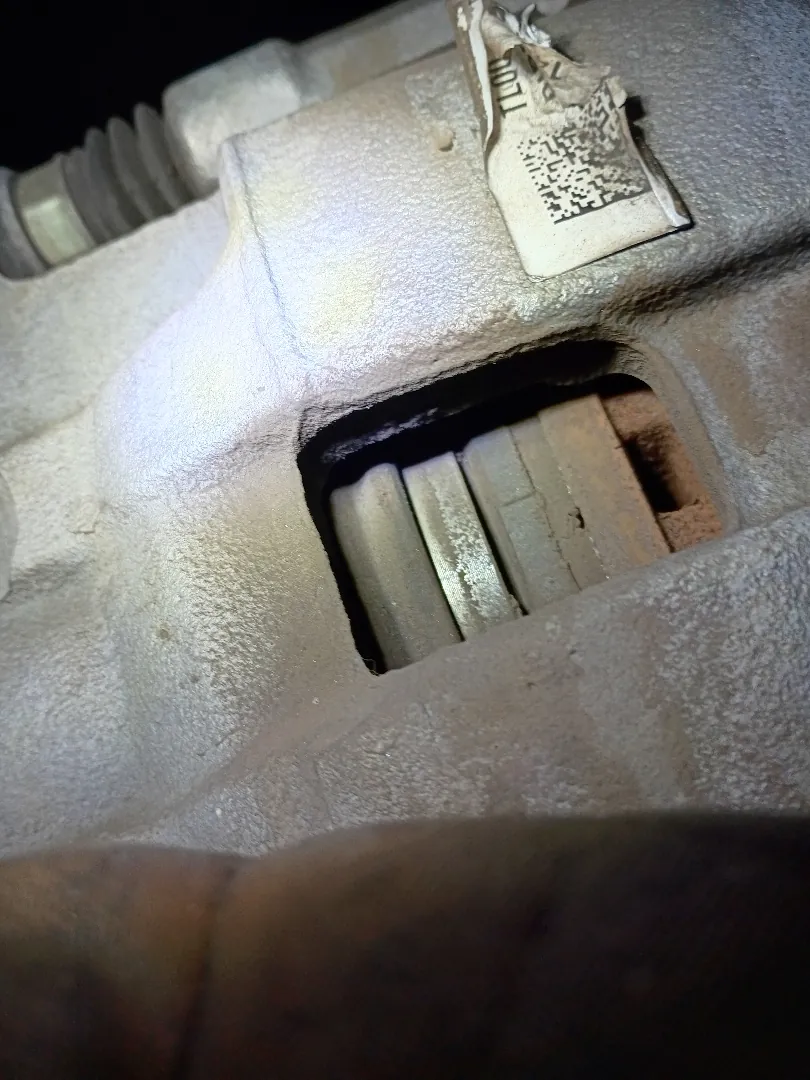
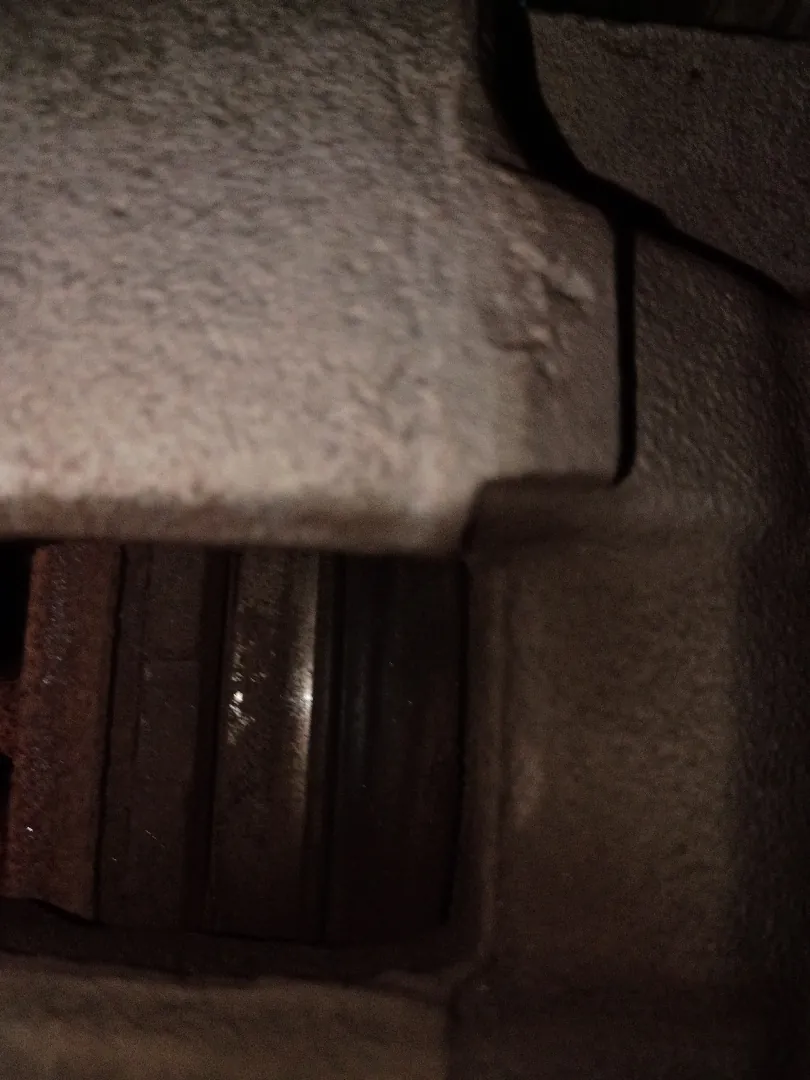
Brake caliper inspected with a flashlight showing remaining friction material on the pad through the caliper window
Pad thickness read through the caliper window with a light. This is a measurement, not an opinion, and you get the number before anyone quotes you a brake job.
Close view of a brake caliper and worn brake pad against a rusted rotor edge
Surface rust on a rotor edge is normal and harmless. A lip you can catch a fingernail on is not, and that is what we are actually looking for.
Detail of a brake caliper body and pad backing plate on a vehicle raised for inspection
Caliper body, pad and rotor in one frame. If the inner and outer pads have worn unevenly, the slide pins are the fault - not the pads.
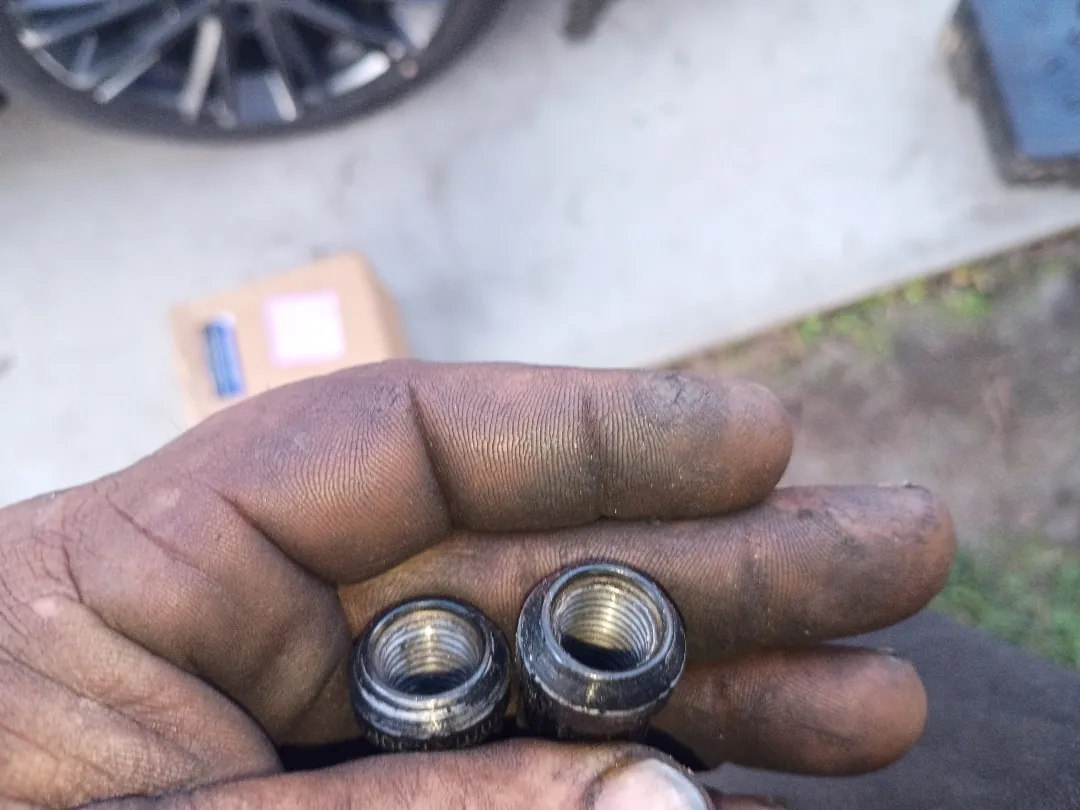
Mechanic's hand holding two brake caliper guide pin bushings removed from a vehicle
Guide pin bushings out of a rear caliper. Two dollars of rubber. Seize one and you will wear a set of pads twice as fast on one side and blame the pads.
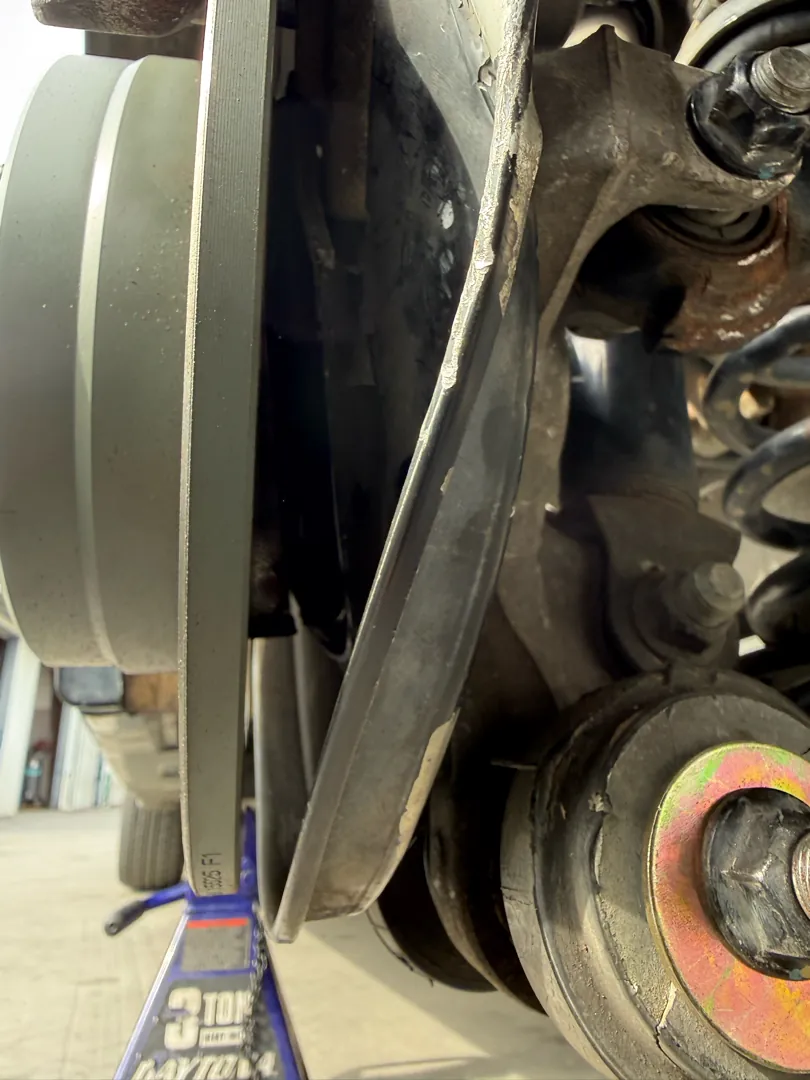
View inside a wheel well showing the brake rotor, strut and lower control arm with the wheel removed
Wheel off, and now you can actually see it: rotor face, strut body, control arm and the bushings that do the quiet failing.

Common questions

How long does a brake job take at my house?
About an hour per axle for pads and rotors on a normal car. Both axles plus a fluid flush and road test is a two to three hour visit. Seized, rusted-in hardware adds time and we will warn you before we start if we can see it coming.
Do I need to be home?
No. Plenty of customers leave the key and go to work. Everything is photographed before and after, and any extra work gets approved by text before it happens.
Can you machine my rotors instead of replacing them?
Usually not worth it. Modern rotors leave the factory thin enough that a cut takes most of the usable material, and around here the corrosion between the hub and the rotor is often the real complaint. New rotors frequently cost less than machining.
My brake pedal went soft over the winter. Is that normal?
No. Cold weather does not soften a pedal. That is air, moisture or a leak in the hydraulic system, and on a salted car a corroded line is high on the list. Get it looked at before you drive it further.

Something wrong with the car? Tell us where it is parked.

$79 flat call-out, diagnostic included, 7 days a week, 7am - 7pm. If you decline the repair that is the whole bill.