Mobile auto repair · 7 days a week, 7am - 7pm $79 flat call-out, diagnostic included (414) 877-8092
Call (414) 877-8092Book a visitServicesCheck Engine & DiagnosticsBatteries, Starters & ChargingNo-Start & RoadsideBrake RepairRust & UndercarriageSuspension & SteeringOil ChangesCooling & HeatingTune-Ups & FiltersEngine RepairTransmissionPre-Purchase InspectionService AreaMilwaukeeWauwatosaWest AllisGreenfieldOak CreekFranklinGlendaleSouth Milwaukee & CudahyBrookfieldNew BerlinMenomonee FallsWaukeshaOur WorkPricesAbout
Home/ Services/No-Start

No-Start & Roadside Help

We come to the car rather than the car coming to us, which on a no-start is the entire point - most are fixed where they sit, and the ones that are not get an honest answer before you pay for a tow.

At a glance

  • Flat $79 call-out that includes the diagnostic, not just the drive
  • Jump starts, battery and starter replacement, fuel and spark testing, all done on site
  • If it needs a shop we tell you before the tow truck is called, not after
  • Street, driveway, work lot, apartment parking, park-and-ride - anywhere legal to work

Three questions that solve most of them

Does it crank? Does it try to fire? Did anything change? Those three answers put almost every no-start into one of three buckets before we even open the hood.

No crank at all, with lights that dim or a rapid click, is electrical - battery, cable, ground, starter or ignition switch. A healthy crank with no fire is fuel, spark or a crank sensor. A car that starts and dies immediately is usually an immobiliser, an idle control problem or a fuel delivery fault that cannot sustain pressure. Telling us which one you have on the phone genuinely speeds up the visit.

Winter no-starts are a different animal

Below about 15 degrees the list changes. Fuel lines with water in them freeze. Diesel gels without the right winter blend. Rubber intake boots shrink and leak enough air to defeat the idle strategy. Batteries that read fine at rest collapse the moment the starter draws on them. And a car that has been sitting through a Milwaukee cold snap with a slow parasitic drain will be flat by the third morning.

A jump start gets a lot of people to work, and we will happily do that. But a car that needed a jump start twice in a week has a fault, and the second jump is a waste of your money if nobody looks for it.

When we say tow it, we mean it

Some things genuinely cannot be finished at the curb in February. A timing chain, an internal engine failure, a transmission that will not engage, a fuel tank that has to come down - those need a lift and a roof. We would rather tell you that in the first twenty minutes than bill you for three hours of shivering.

If it comes to that, the diagnostic still comes off the eventual repair, and you get the written findings either way so a second opinion is easy to get.

From the job book

What this work looks like

Real repairs, photographed on the job. These are jobs from our wider mechanic network rather than Milwaukee customers — we say so on every page rather than implying otherwise.
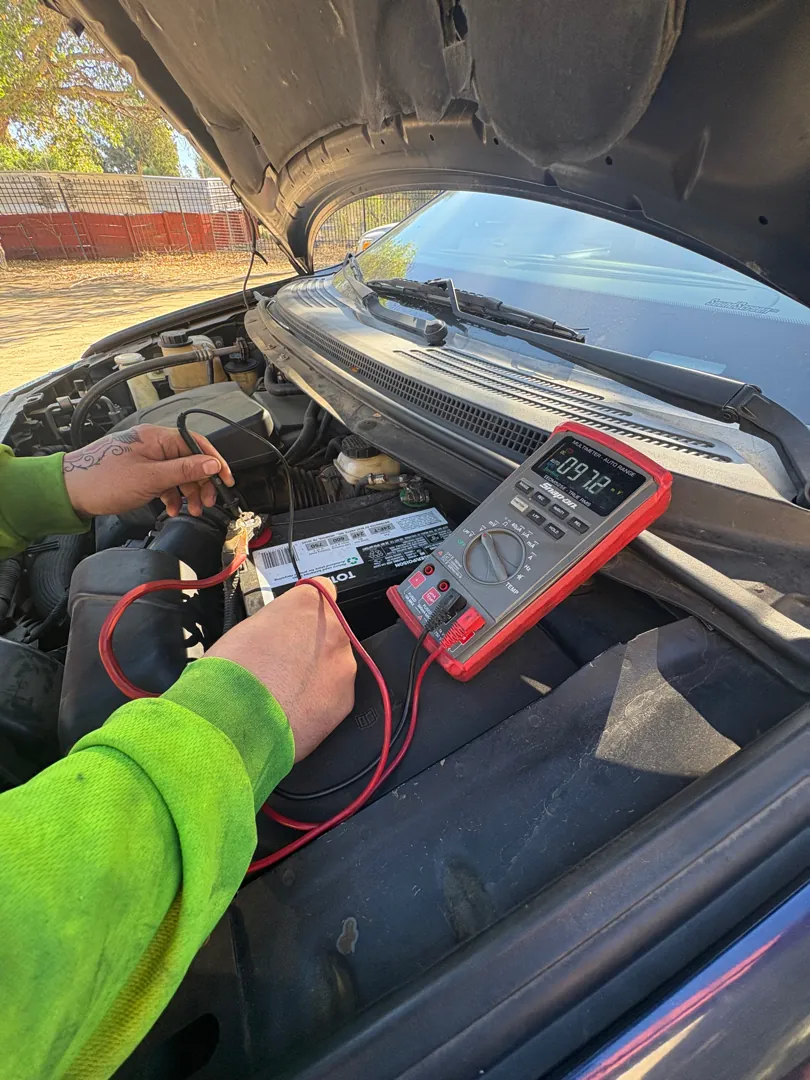
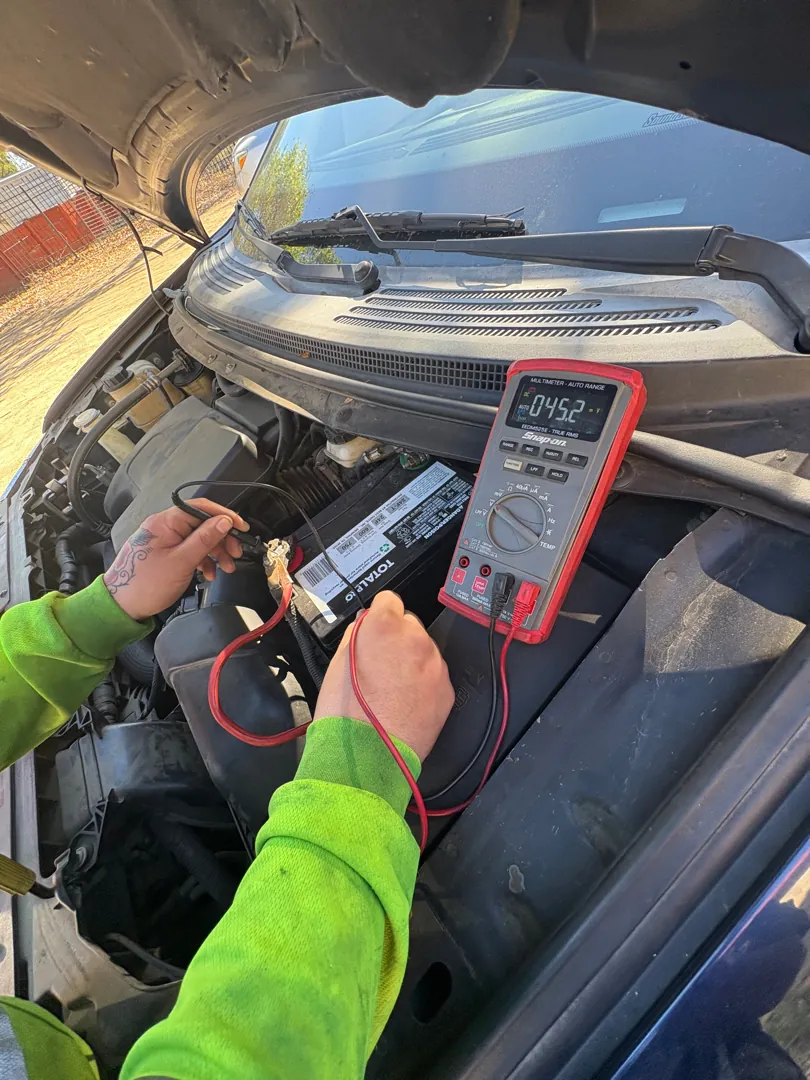
Mechanic in a high-visibility jacket testing battery voltage with a multimeter under an open hood
A meter on the posts before anything else. Resting voltage, cranking voltage and charging voltage are three different tests, and a parts-store 'free battery check' usually runs one of them.
Close view of a digital multimeter connected to a car battery during a charging system test
Same battery, second reading with the engine running. If the number does not climb, the battery was never the problem.
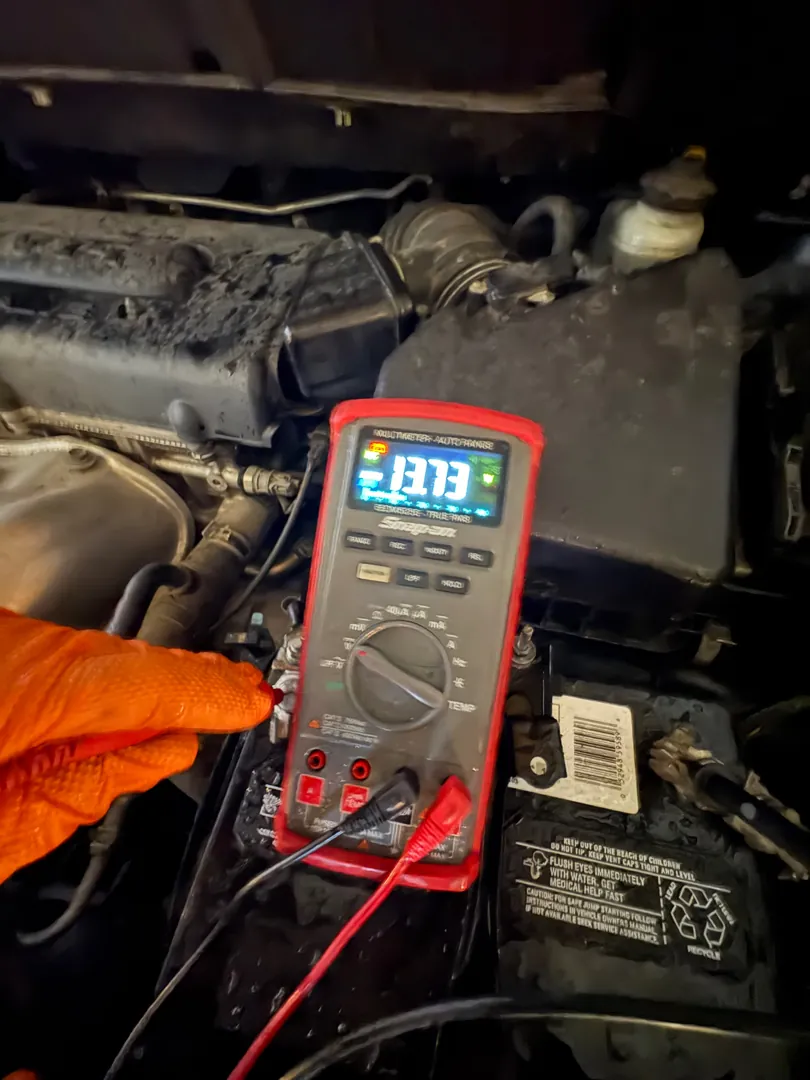
Digital multimeter in an engine bay reading 13.13 volts during an alternator test
13.13 volts at the battery with the engine running. Healthy is roughly 13.5 to 14.7 - this one was charging, but not enough to keep up, which is exactly how an alternator dies slowly.
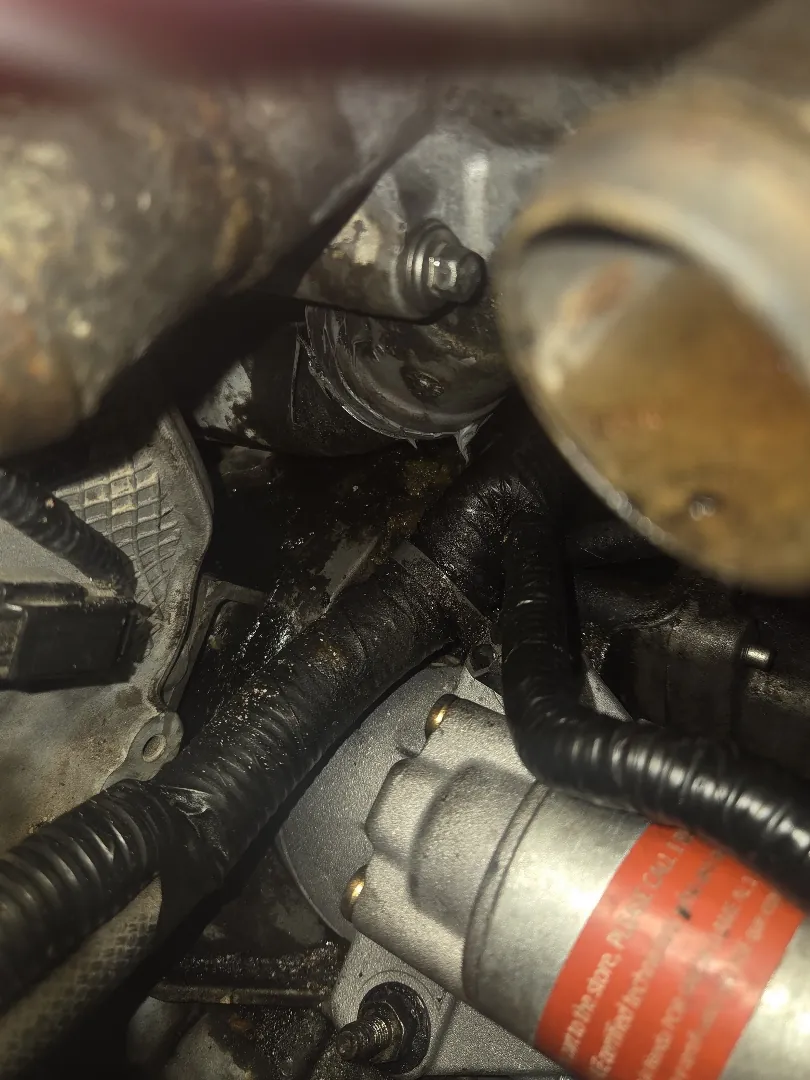
Starter motor and solenoid with its power cable visible deep in a crowded engine bay
The starter, found. On plenty of modern engines it lives under the intake, and half the labor on the job is getting a hand and a socket to it.
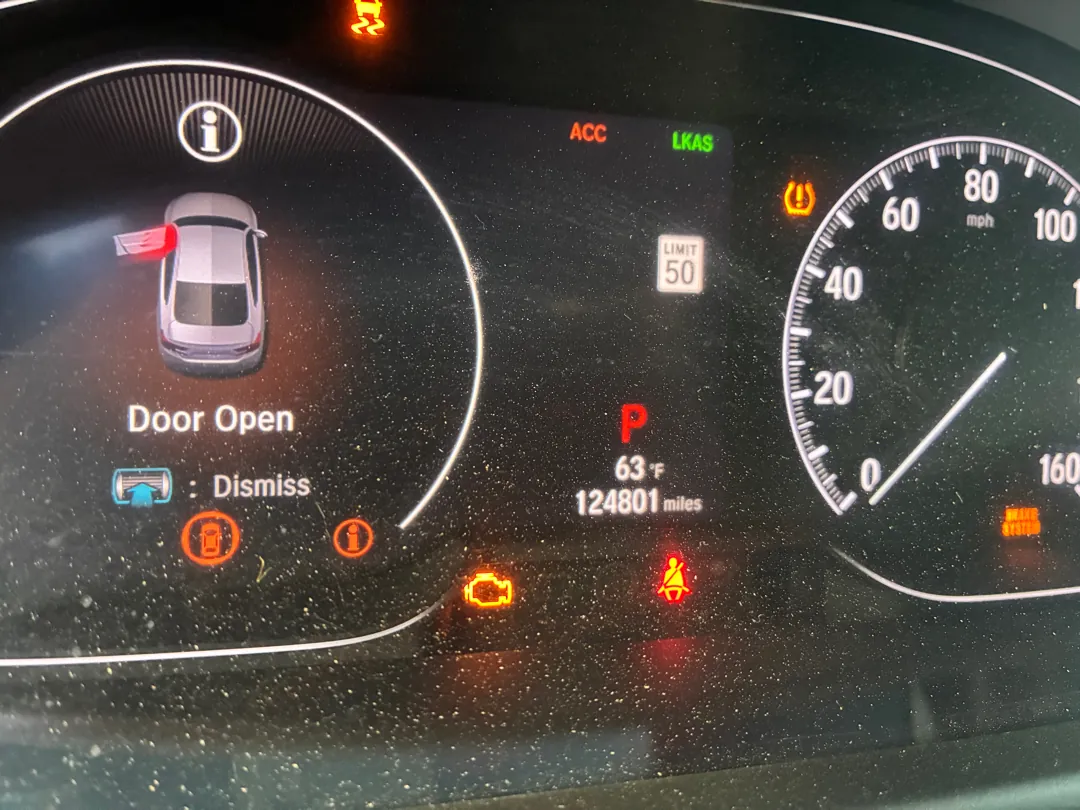
Instrument cluster lit with multiple warning lamps including check engine, tire pressure and brake system
Six lamps at once is not six faults. It is usually one supply, one ground or one battery that dropped below the voltage the modules need to stay awake.
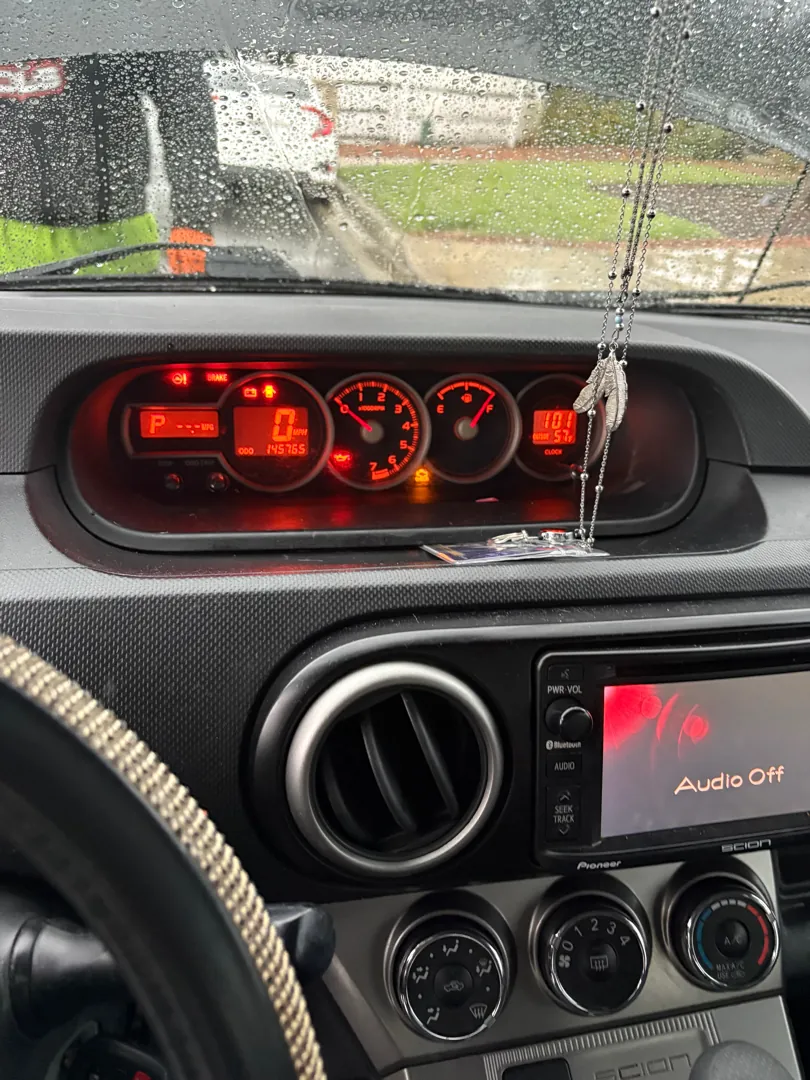
Car instrument cluster glowing at night with warning indicators while rain sits on the windshield
The call that comes in at night, in the rain, from a parking lot. This is the one we built the business around.

Common questions

Can you come out tonight?
We run 7am to 7pm, seven days. Outside those hours we will take the call and book you first thing rather than promise a midnight visit we cannot staff properly.
Will you come to the side of a highway?
No. A live shoulder on I-94 or the Hoan is not a place to work on a car, and we will not put a mechanic there. Call for a tow to somewhere safe and we will meet you at the other end.
How much is a jump start?
The same $79 flat call-out, which includes testing why it went flat in the first place. If we replace the battery on the spot, the call-out comes off the repair.
My car starts fine but I do not trust it. Can you check it before a road trip?
Yes - book a diagnostic and say that is what it is for. Battery, charging, belts, fluids, brakes, tires and a full scan. Much cheaper than the same conversation in a motel parking lot in the Dells.

Something wrong with the car? Tell us where it is parked.

$79 flat call-out, diagnostic included, 7 days a week, 7am - 7pm. If you decline the repair that is the whole bill.