Mobile auto repair · 7 days a week, 7am - 7pm $79 flat call-out, diagnostic included (414) 877-8092
Call (414) 877-8092Book a visitServicesCheck Engine & DiagnosticsBatteries, Starters & ChargingNo-Start & RoadsideBrake RepairRust & UndercarriageSuspension & SteeringOil ChangesCooling & HeatingTune-Ups & FiltersEngine RepairTransmissionPre-Purchase InspectionService AreaMilwaukeeWauwatosaWest AllisGreenfieldOak CreekFranklinGlendaleSouth Milwaukee & CudahyBrookfieldNew BerlinMenomonee FallsWaukeshaOur WorkPricesAbout
Home/Our Work

43 real repairs. No stock photos.

Scan screens with the actual codes on them, failed parts on the ground, measurements taken with a light. This is what you get sent after your own job, too.

Where these photos come from, plainly: every one of them is a genuine repair on a genuine customer's car — and none of them were taken in Wisconsin. They are jobs from the wider mechanic network this business is part of. We use them because a corroded caliper looks the same in any zip code, and we label it here rather than letting you assume they are local. As Milwaukee jobs build up, they will replace these.

Plates, VINs and faces are pixelated before publication. Nothing here identifies a customer or a vehicle.

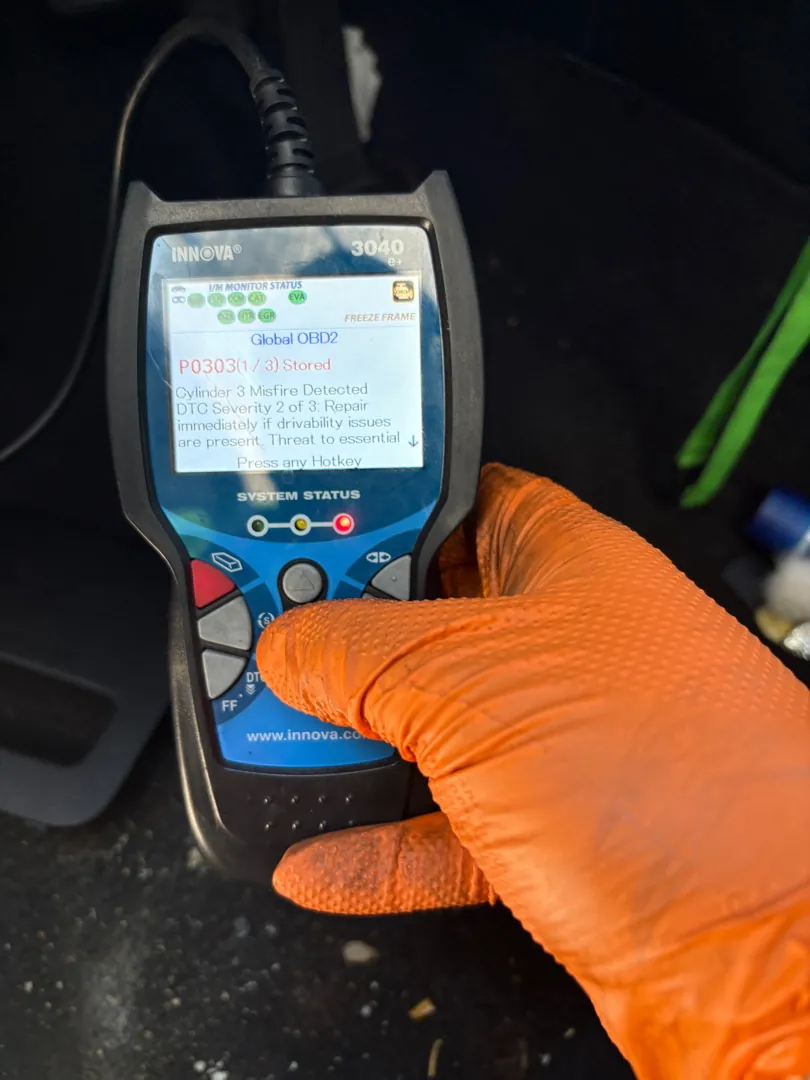
Handheld OBD2 scan tool held in an orange nitrile glove showing fault code P0303, cylinder 3 misfire detected
P0303 - cylinder 3 misfire, stored as permanent. The code tells you which cylinder is unhappy. It does not tell you whether the cause is a coil, a plug, an injector or a leak, and that is the part you are actually paying for.
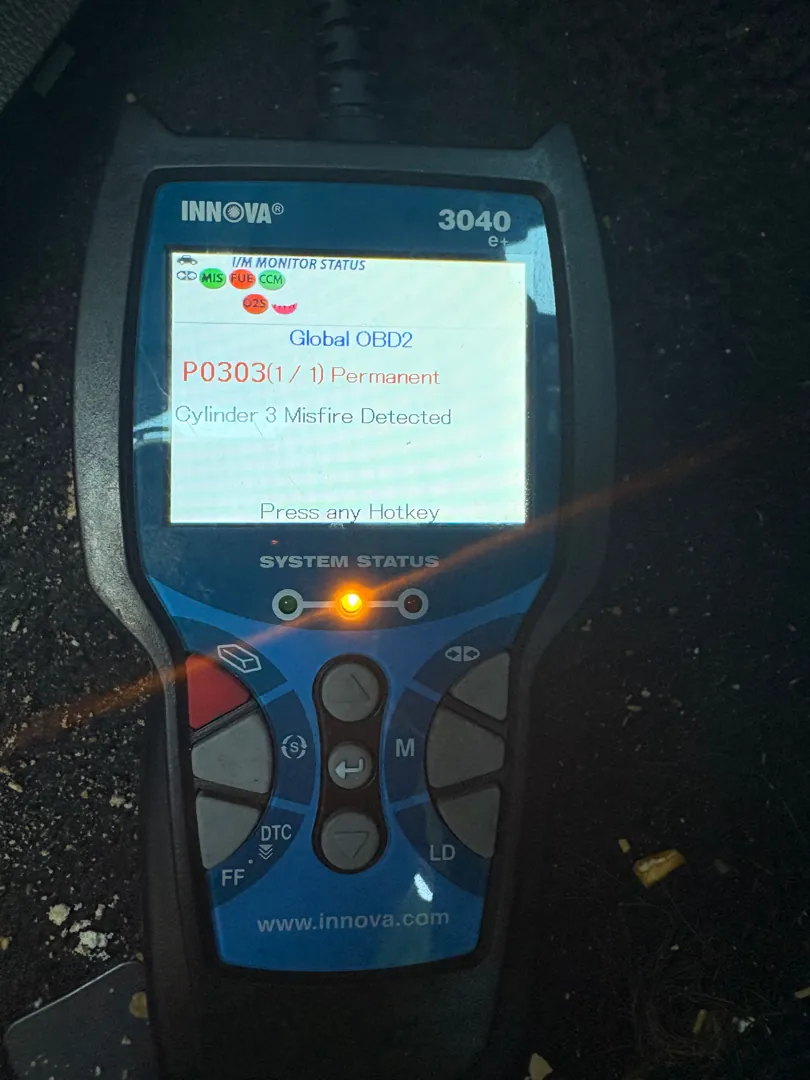
Blue handheld code reader lying on dark ground with a misfire fault code on the screen
Same fault, read again after the repair to confirm it stayed gone. We re-scan before we leave, not before we start.
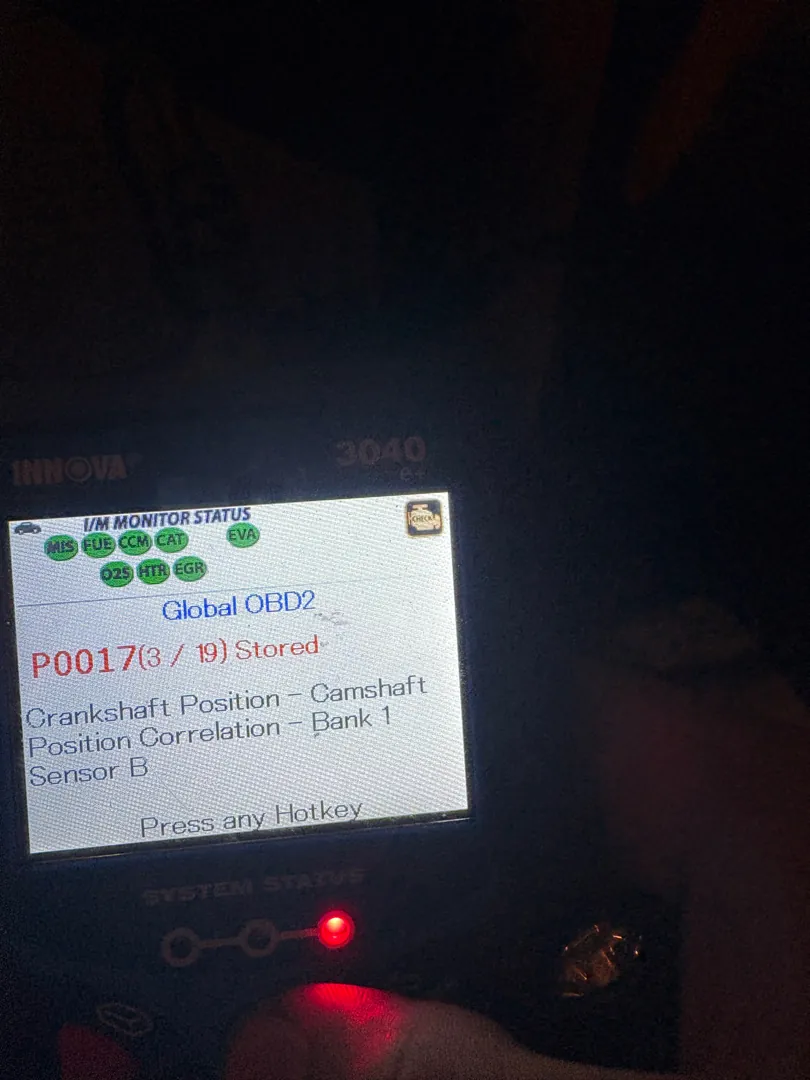
Code reader showing fault P0017, crankshaft position to camshaft position correlation, bank 1 sensor B
P0017 - crank and cam are out of correlation. That is a timing chain, a phaser or a sensor, and guessing wrong on this one is an expensive mistake.
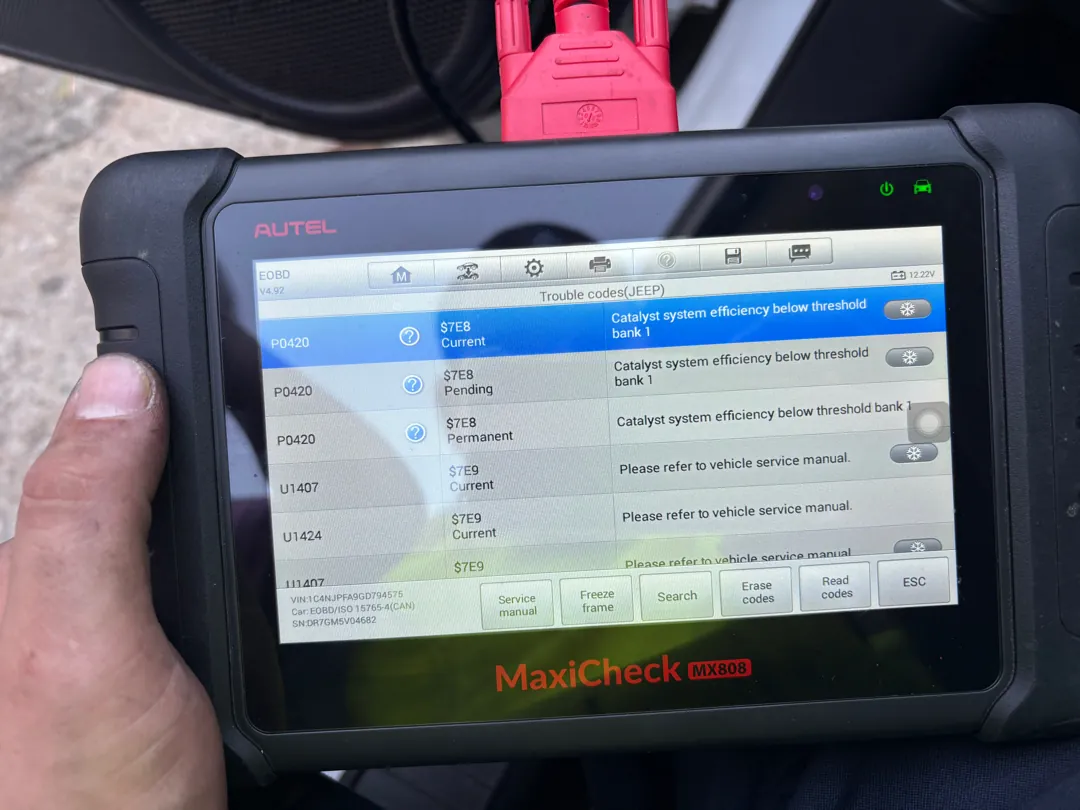
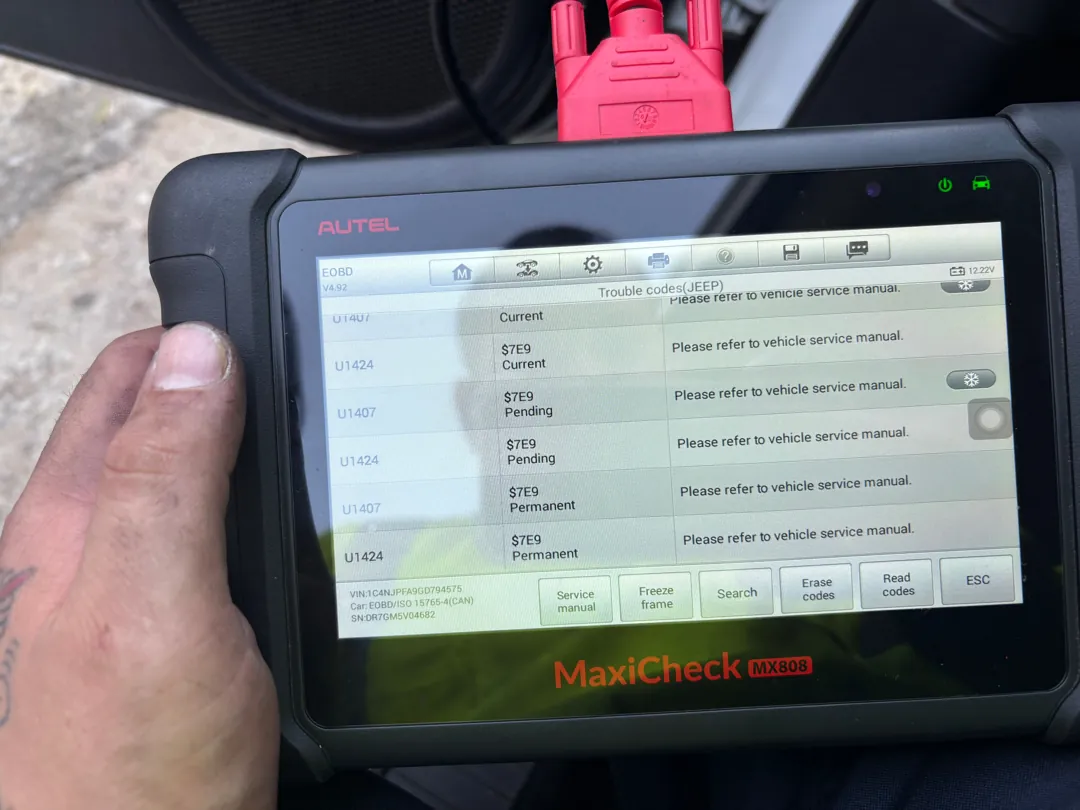
Professional Autel MaxiCheck tablet held in one hand listing multiple stored and pending trouble codes
A full-system scan, not a parts-counter code pull. Pending, current and permanent codes all read separately, and every module gets asked - not just the engine.
Scan tablet screen showing catalyst efficiency and communication fault codes with pending and permanent status flags
Catalyst efficiency below threshold sitting next to a communication fault. Read in isolation they look like two repairs. Read together they are usually one.
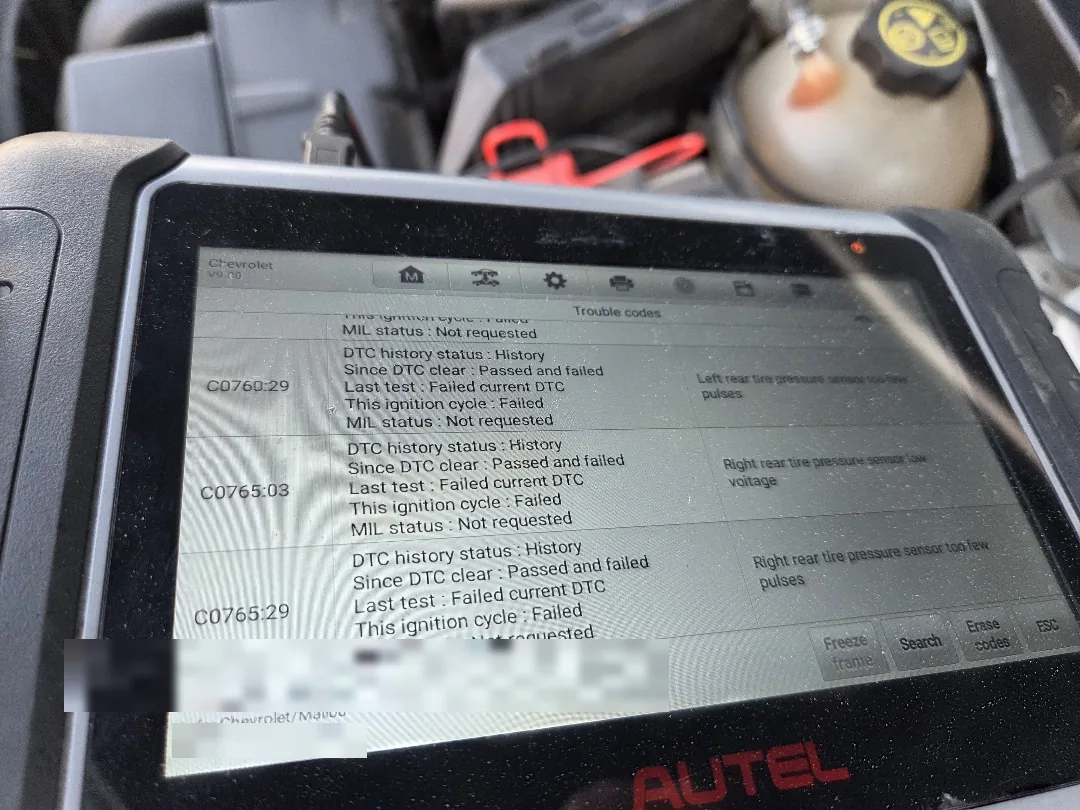
Scan tool screen listing tire pressure sensor faults for individual wheel positions
Left rear reading too few pulses, right rear low voltage. Knowing which corner failed, and how, is the difference between one sensor and a set of four.
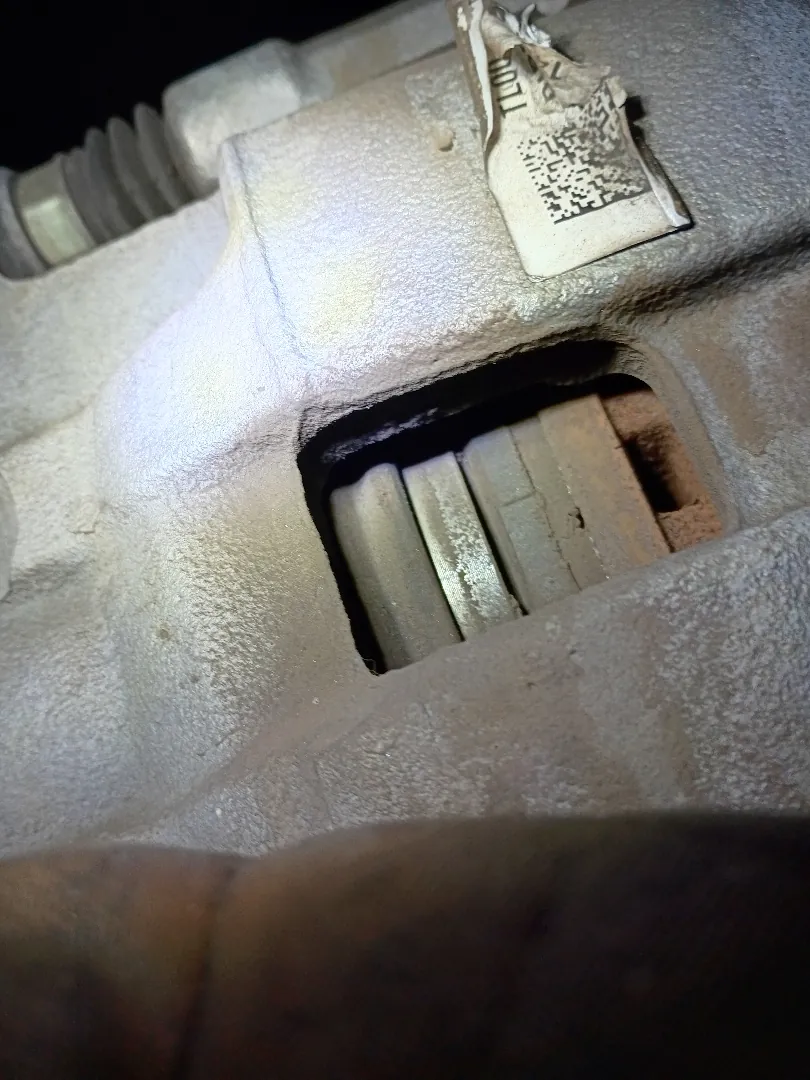
Brake caliper inspected with a flashlight showing remaining friction material on the pad through the caliper window
Pad thickness read through the caliper window with a light. This is a measurement, not an opinion, and you get the number before anyone quotes you a brake job.
Close view of a brake caliper and worn brake pad against a rusted rotor edge
Surface rust on a rotor edge is normal and harmless. A lip you can catch a fingernail on is not, and that is what we are actually looking for.
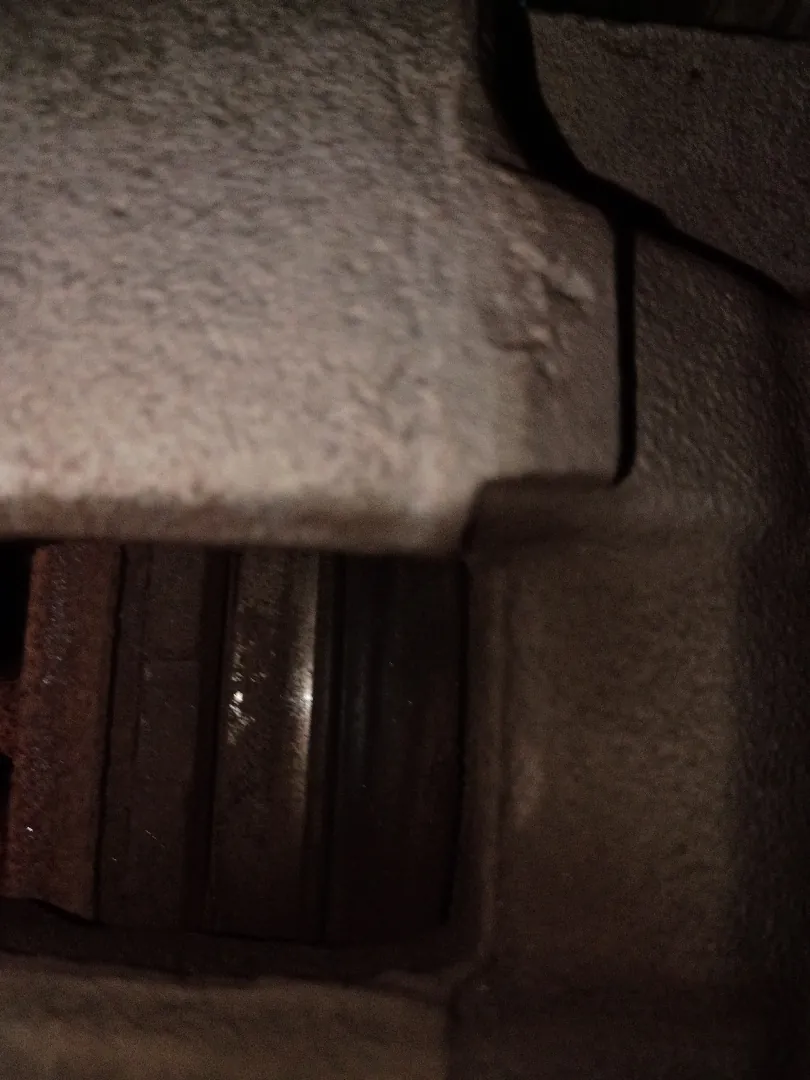
Detail of a brake caliper body and pad backing plate on a vehicle raised for inspection
Caliper body, pad and rotor in one frame. If the inner and outer pads have worn unevenly, the slide pins are the fault - not the pads.
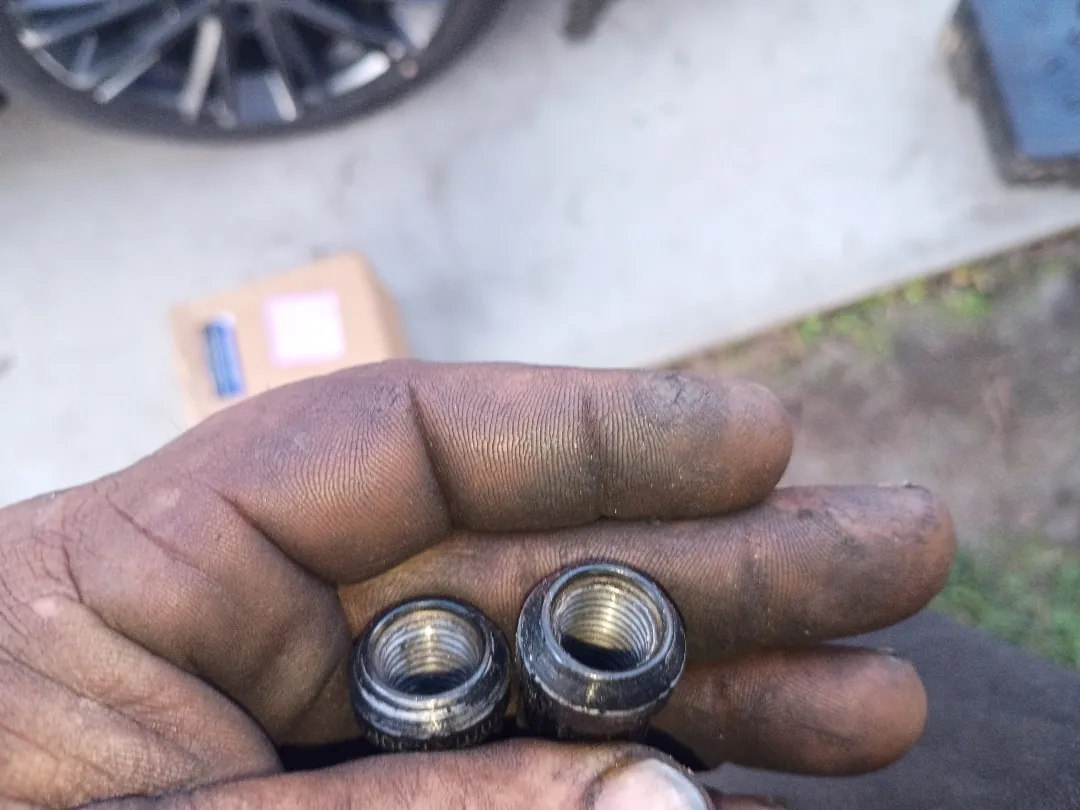
Mechanic's hand holding two brake caliper guide pin bushings removed from a vehicle
Guide pin bushings out of a rear caliper. Two dollars of rubber. Seize one and you will wear a set of pads twice as fast on one side and blame the pads.
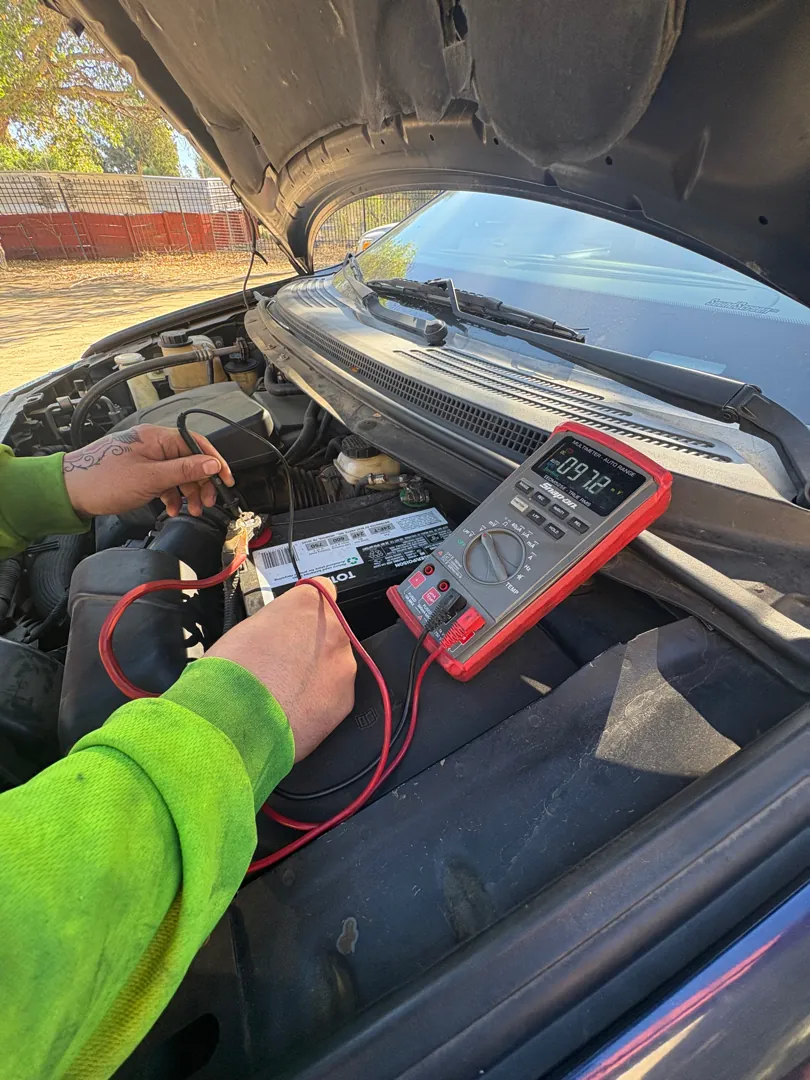
Mechanic in a high-visibility jacket testing battery voltage with a multimeter under an open hood
A meter on the posts before anything else. Resting voltage, cranking voltage and charging voltage are three different tests, and a parts-store 'free battery check' usually runs one of them.
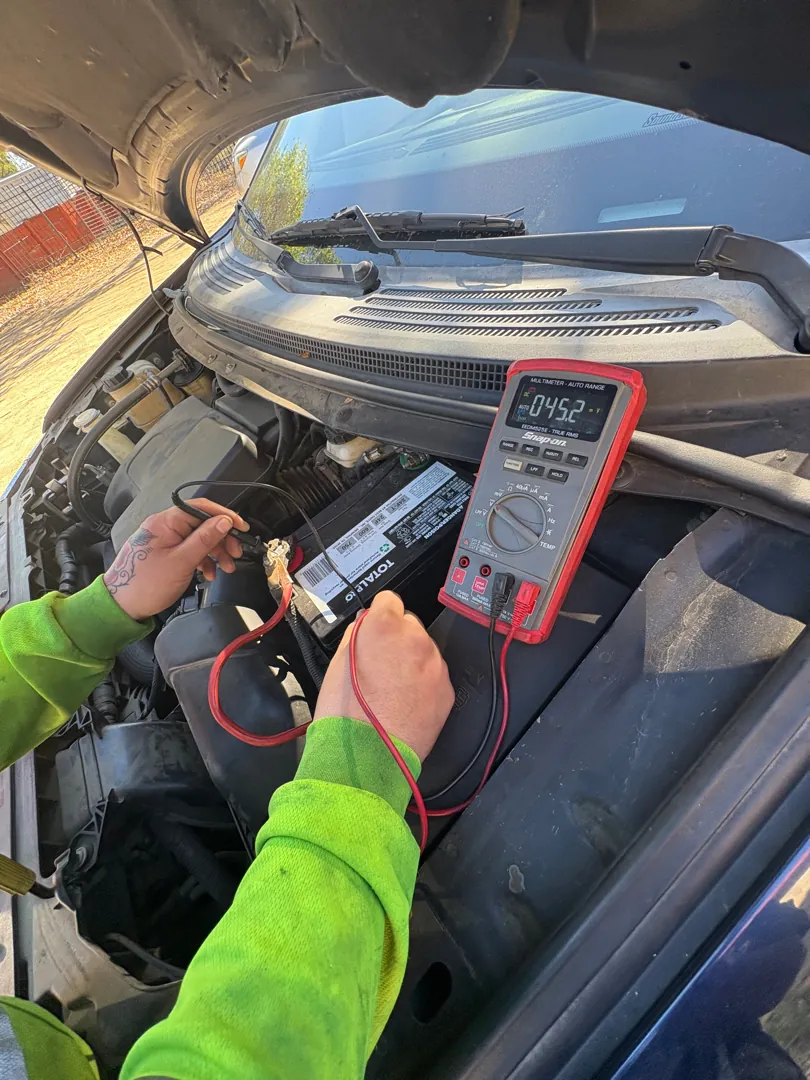
Close view of a digital multimeter connected to a car battery during a charging system test
Same battery, second reading with the engine running. If the number does not climb, the battery was never the problem.
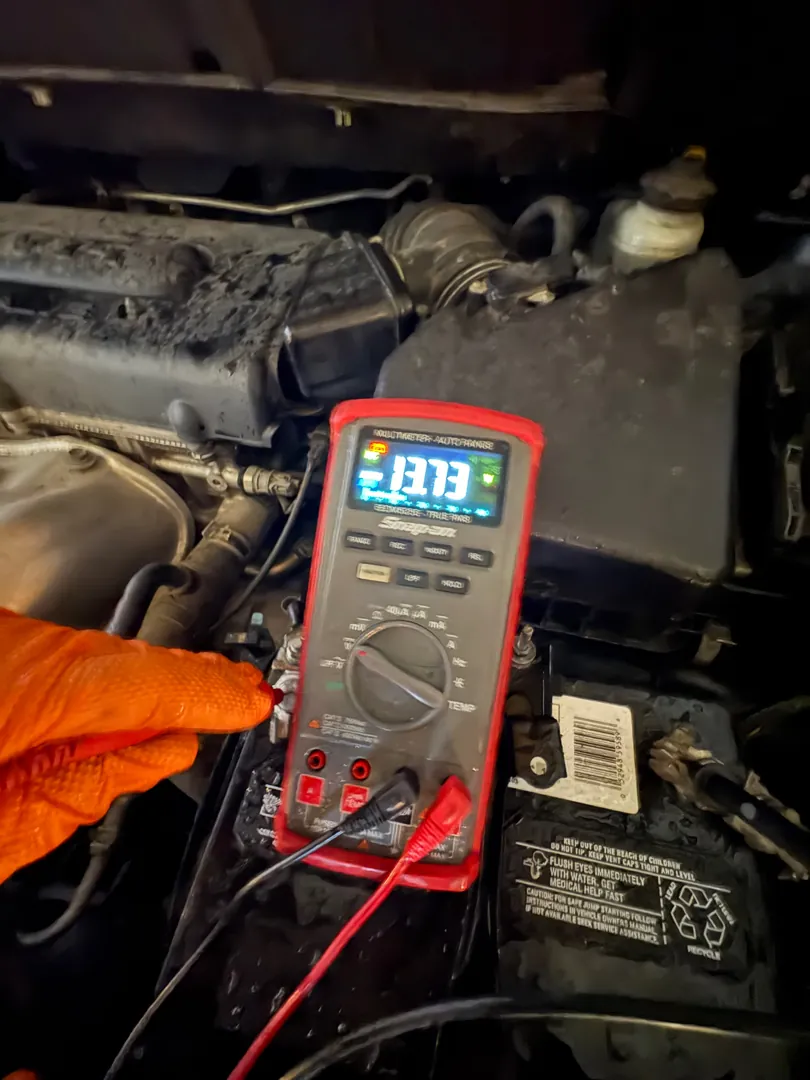
Digital multimeter in an engine bay reading 13.13 volts during an alternator test
13.13 volts at the battery with the engine running. Healthy is roughly 13.5 to 14.7 - this one was charging, but not enough to keep up, which is exactly how an alternator dies slowly.
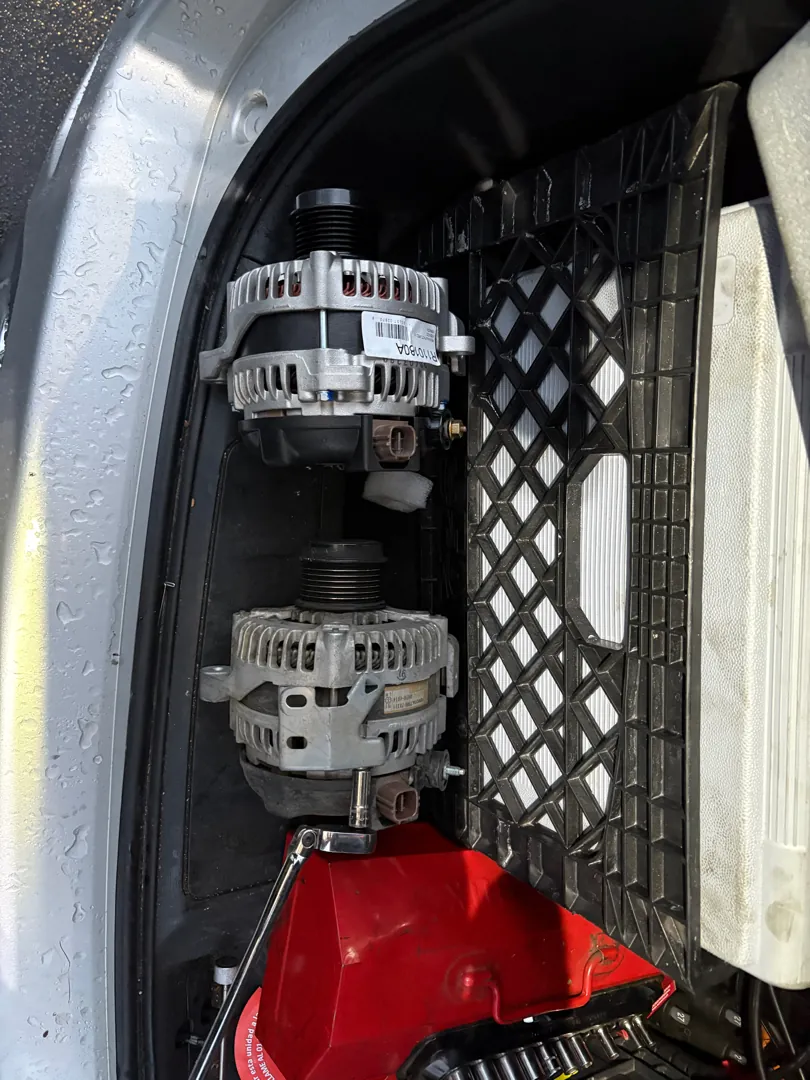
Two alternators side by side on a vehicle grille in the rain, one removed and one new
Old unit out, replacement in, photographed side by side in the rain. You get the picture of the failed part whether you ask for it or not.
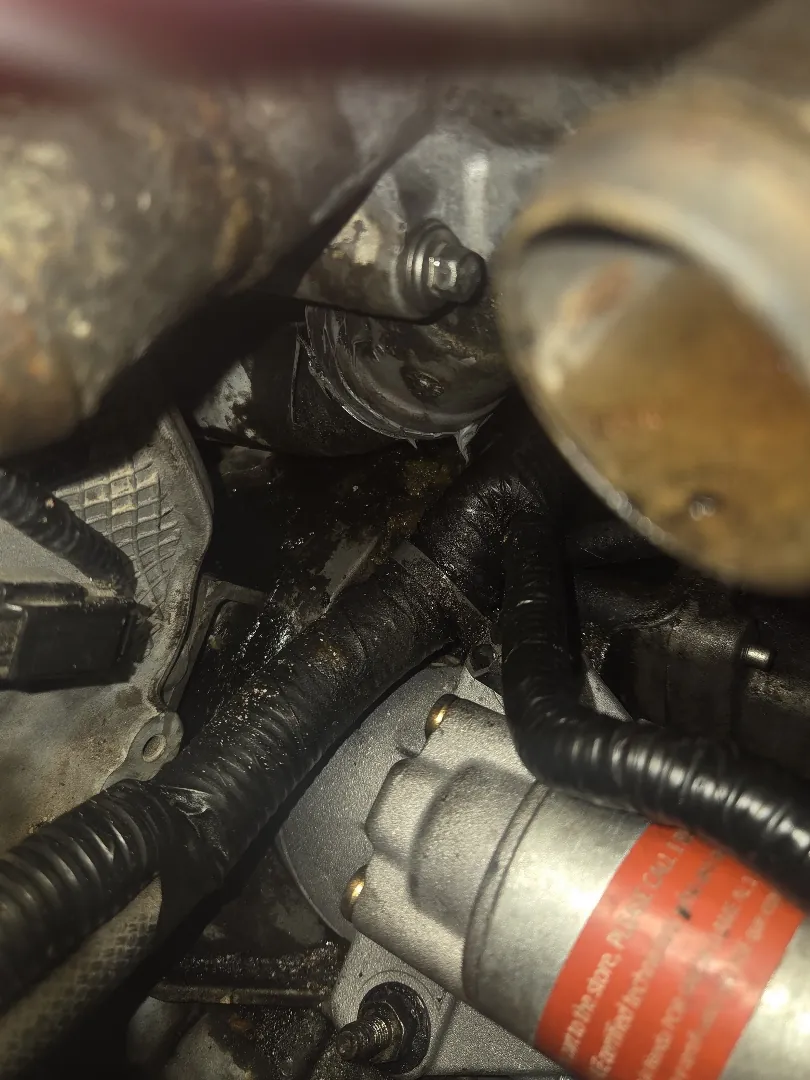
Starter motor and solenoid with its power cable visible deep in a crowded engine bay
The starter, found. On plenty of modern engines it lives under the intake, and half the labor on the job is getting a hand and a socket to it.
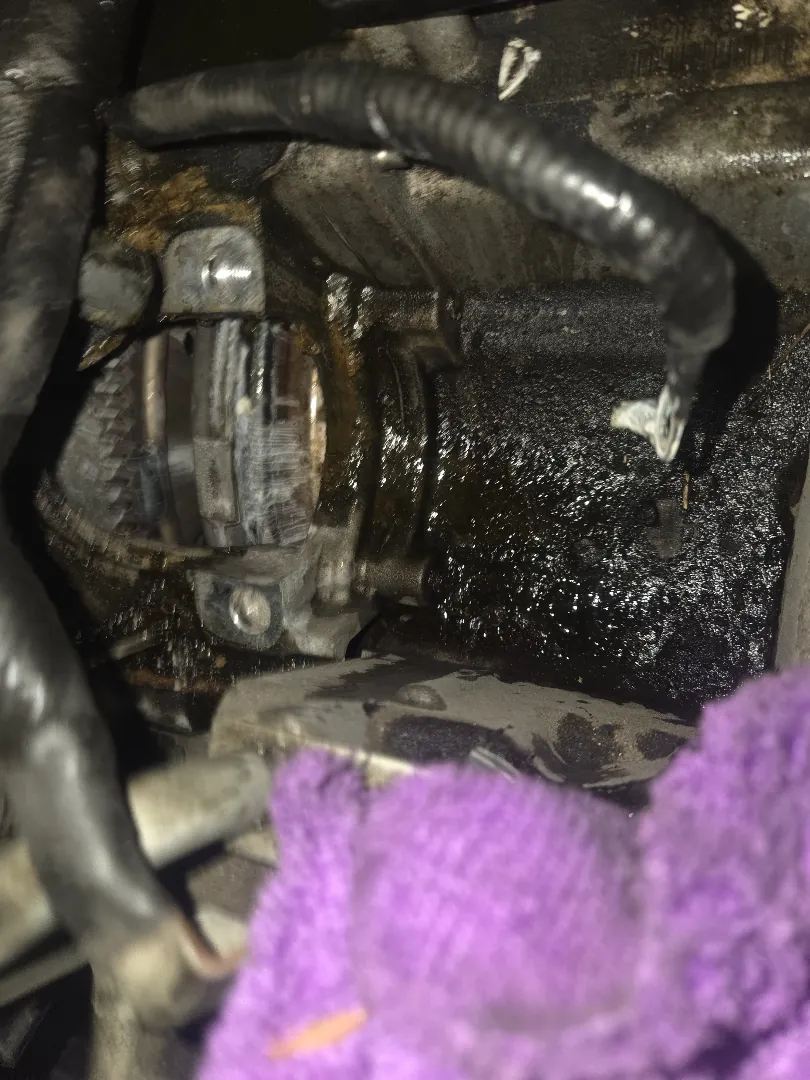
Engine bay with a protective towel laid over components during a starter replacement
A towel over the paint and the plumbing before the tools come out. Small thing. It is the difference between a repair and a repair plus a scratch.
Instrument cluster lit with multiple warning lamps including check engine, tire pressure and brake system
Six lamps at once is not six faults. It is usually one supply, one ground or one battery that dropped below the voltage the modules need to stay awake.
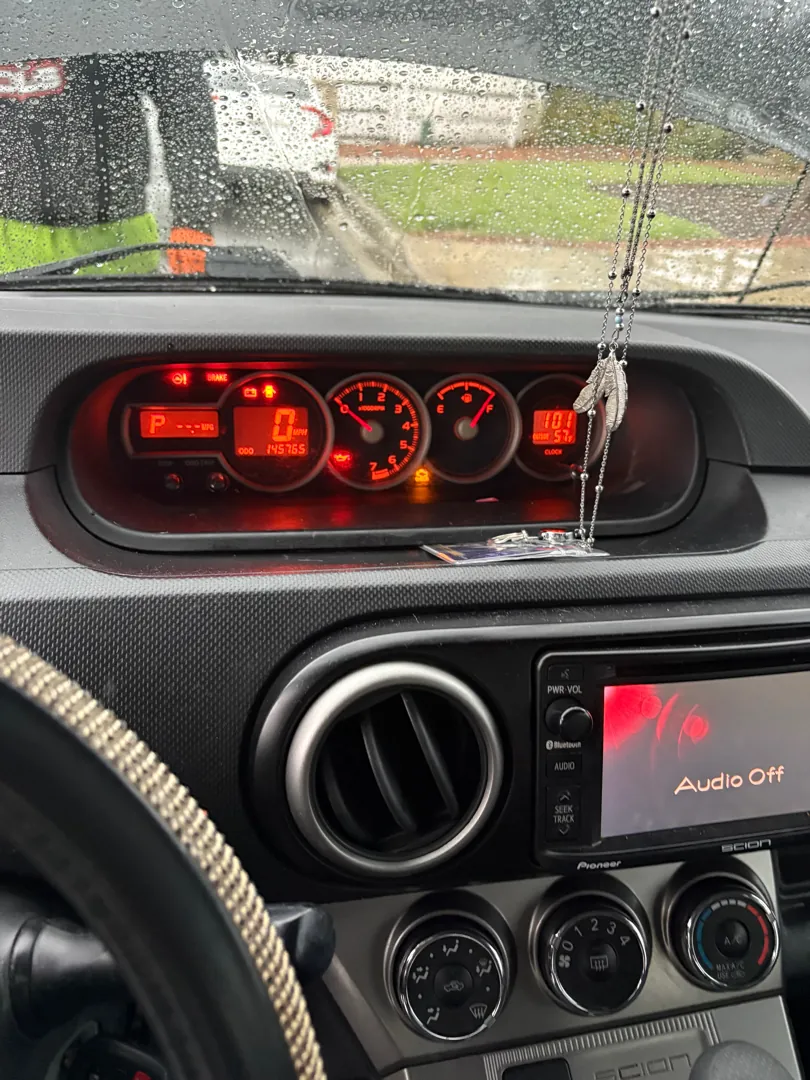
Car instrument cluster glowing at night with warning indicators while rain sits on the windshield
The call that comes in at night, in the rain, from a parking lot. This is the one we built the business around.
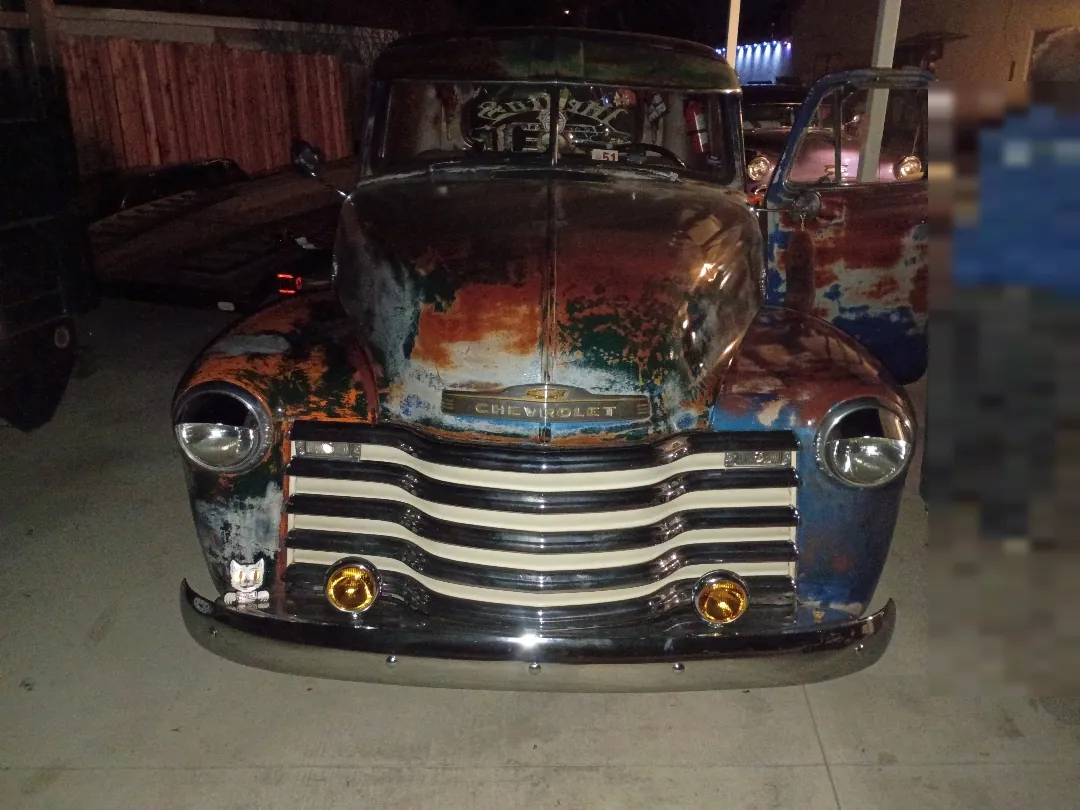
Vintage Chevrolet pickup with a chrome grille and patina paintwork parked indoors during a no-start diagnosis
No data bus, no scan tool, no help from a computer. On something this old the diagnosis goes back to compression, spark and fuel, in that order.
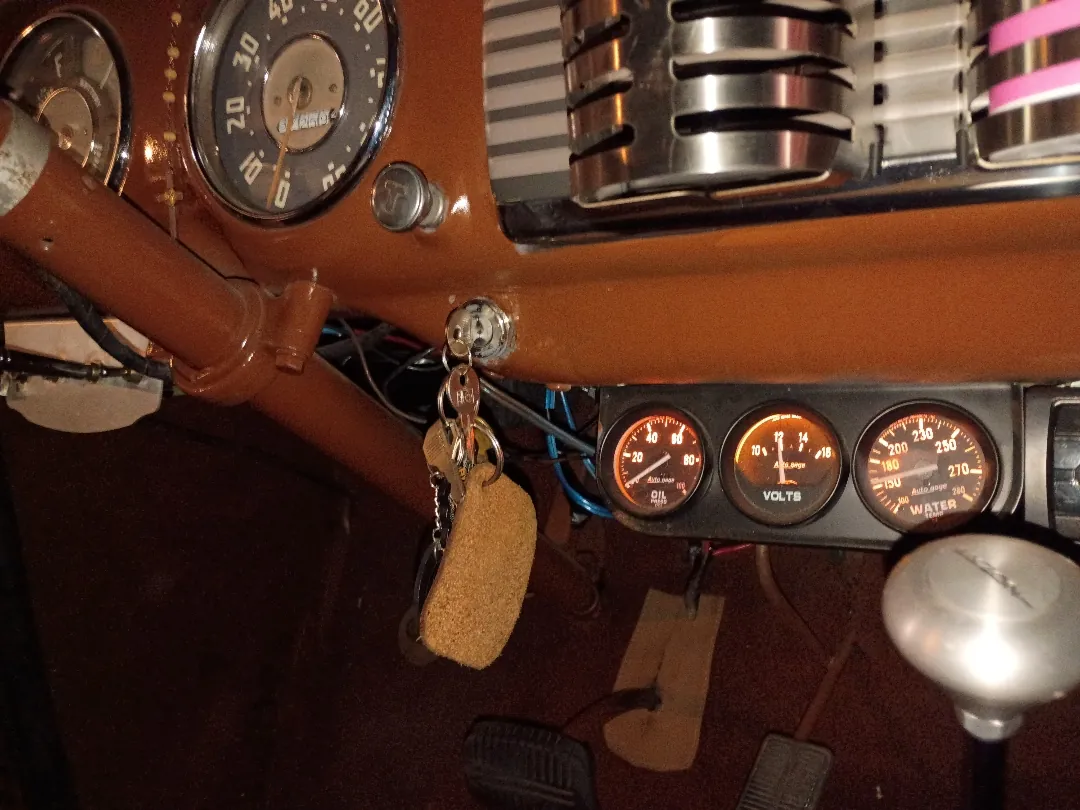
Interior of a vintage pickup showing an orange painted dash with aftermarket amp, volt and temperature gauges
Aftermarket amp, volt and temp gauges under the dash. On an old truck these three needles are the diagnostic system, and they are better than nothing by a mile.
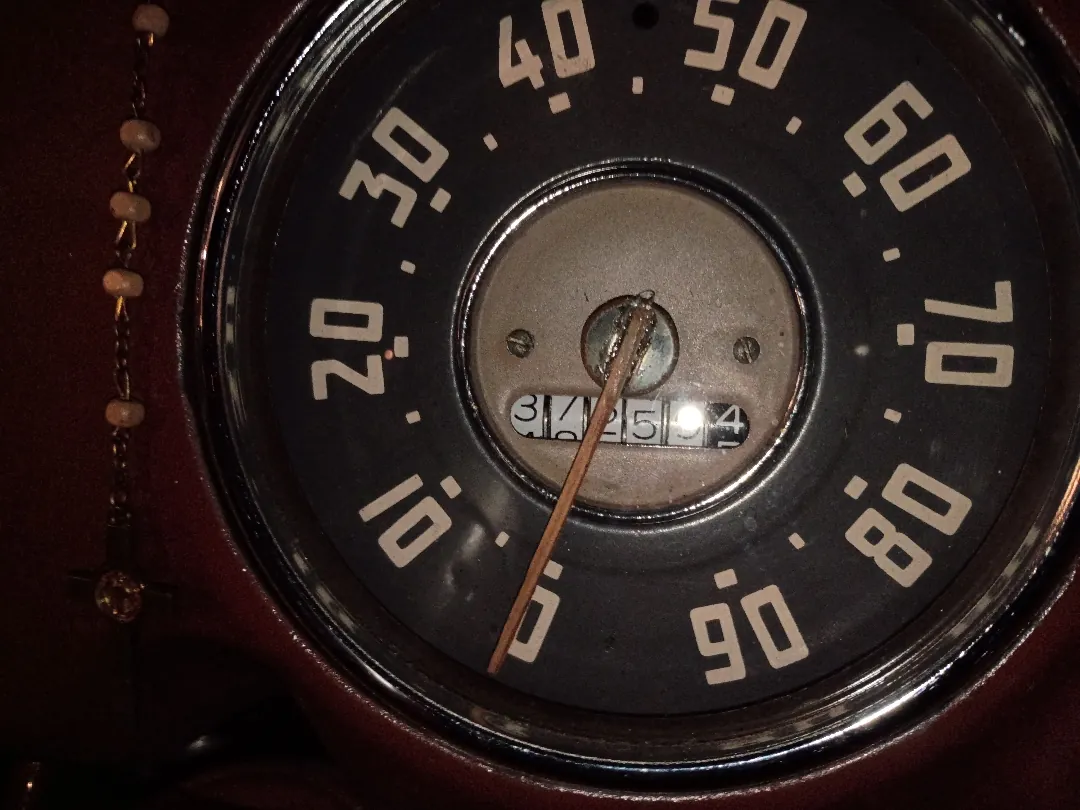
Round vintage speedometer face reading to 90 miles per hour with a mechanical odometer below it
Mileage logged before we touched it. We do that on a 1949 truck and on a 2024 crossover, for exactly the same reason.
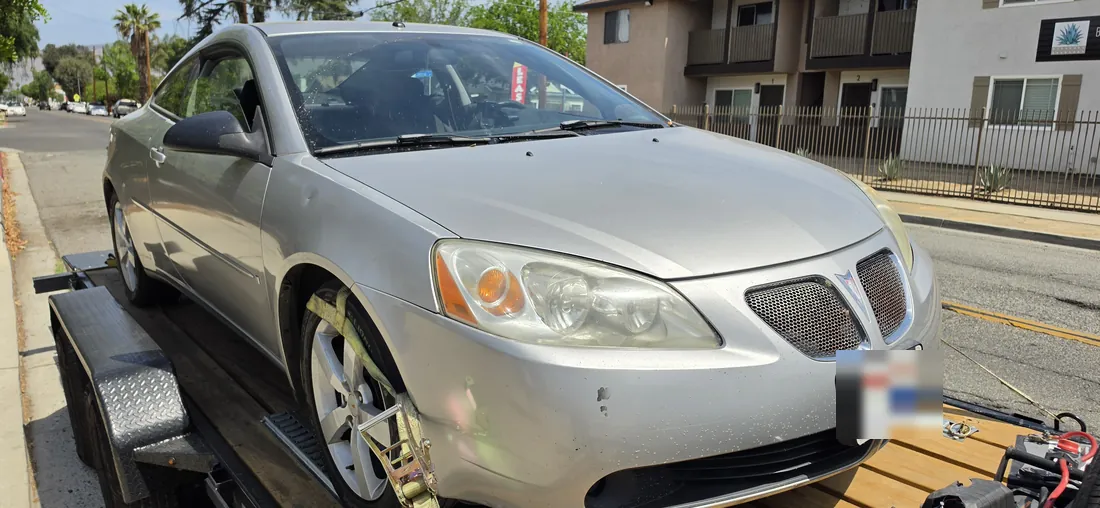
Silver coupe loaded on a flatbed tow trailer at the curb after a transmission failure
Some jobs cannot be finished at the curb. When that happens we say so early, arrange the tow, and the diagnostic time still comes off the repair.
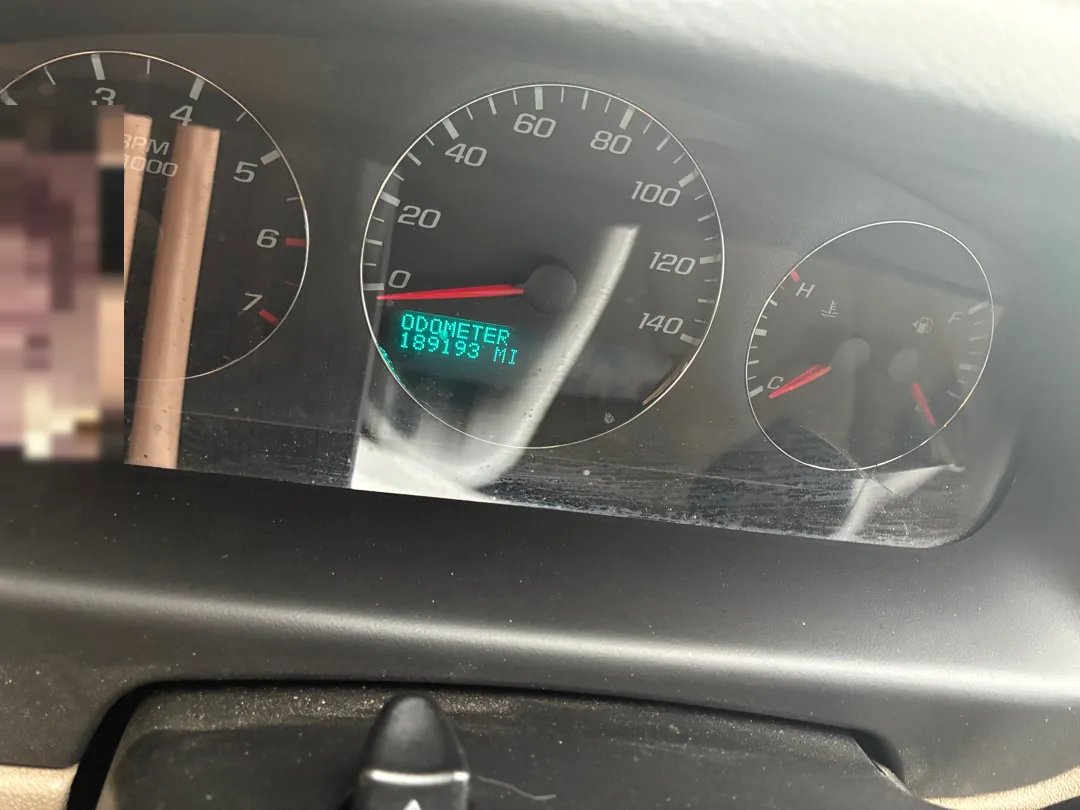
Instrument cluster showing the coolant temperature gauge and an odometer reading over 189,000 miles
Temperature gauge and mileage, logged at arrival. A gauge that climbs on idle and drops at speed is a fan or a flow problem, not a thermostat.
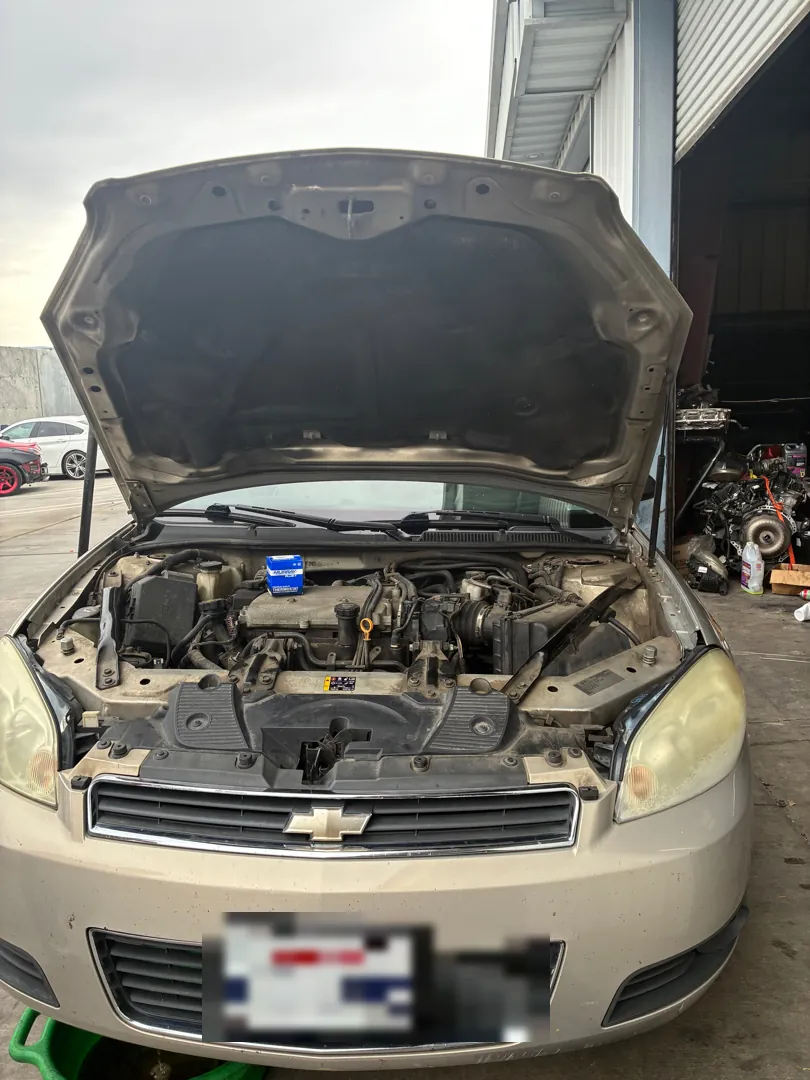
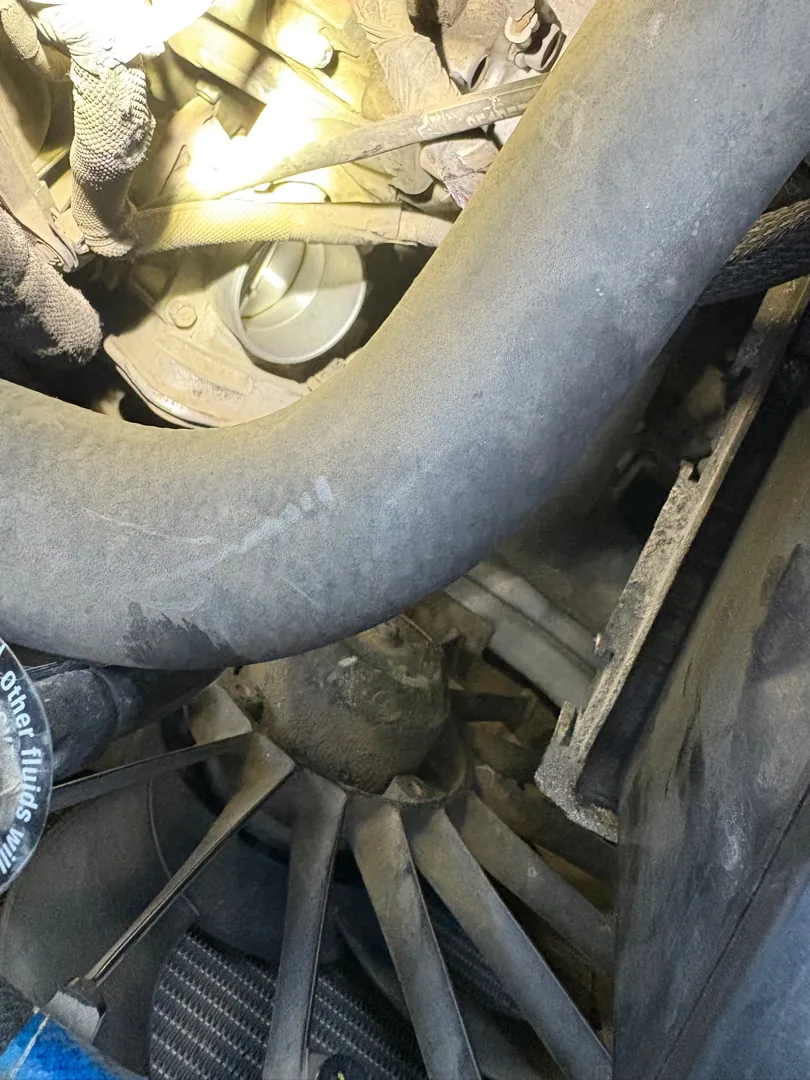
Sedan parked with the hood raised showing the radiator, coolant reservoir and engine bay during a thermostat job
Hood up on a thermostat job. Cooling work is the one repair where coming to you genuinely beats a shop - the car never has to survive the drive there.
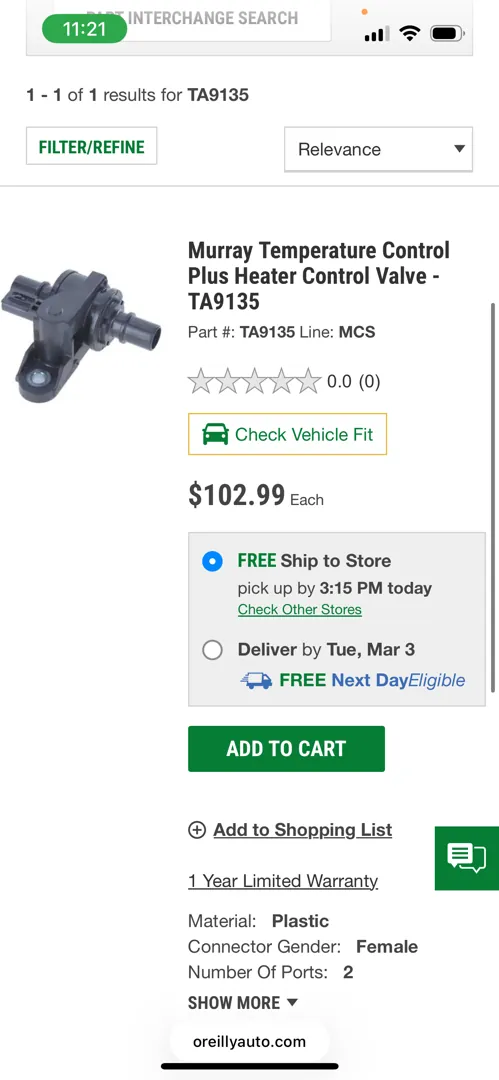
Parts catalogue listing on a phone showing a temperature control heater valve priced at $102.99
The actual part, on the actual parts page, at the actual price. We show you the screen. What you pay for parts is what it says there.
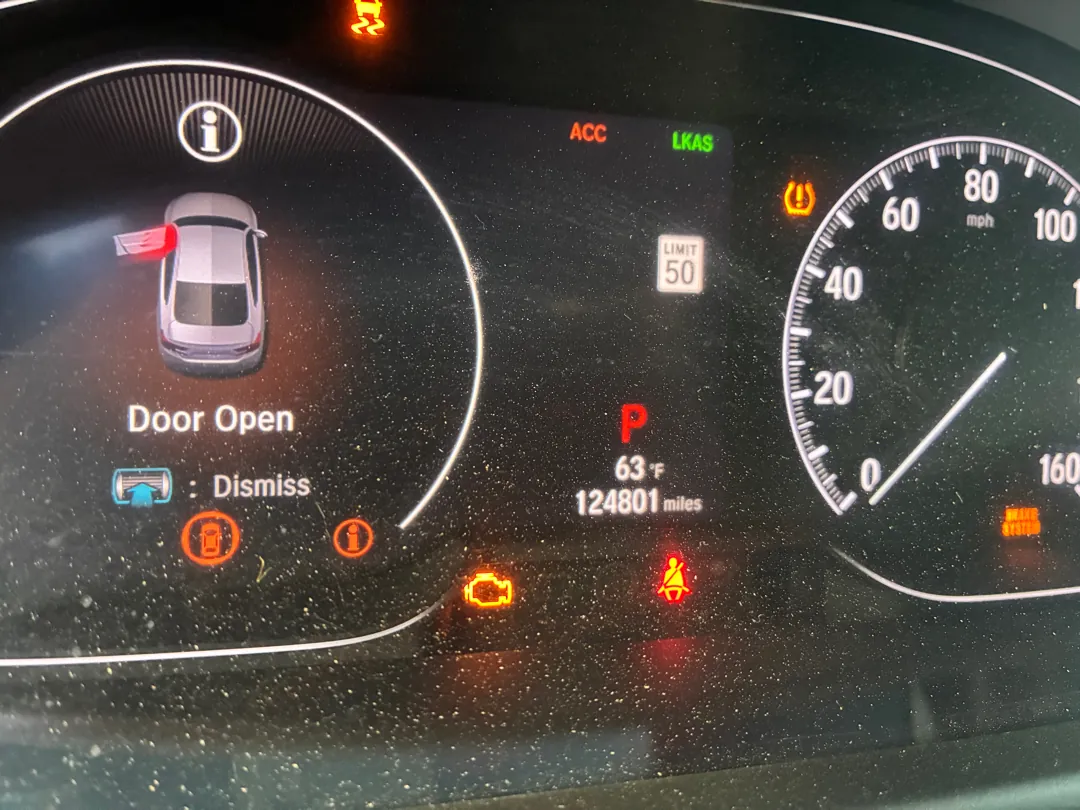
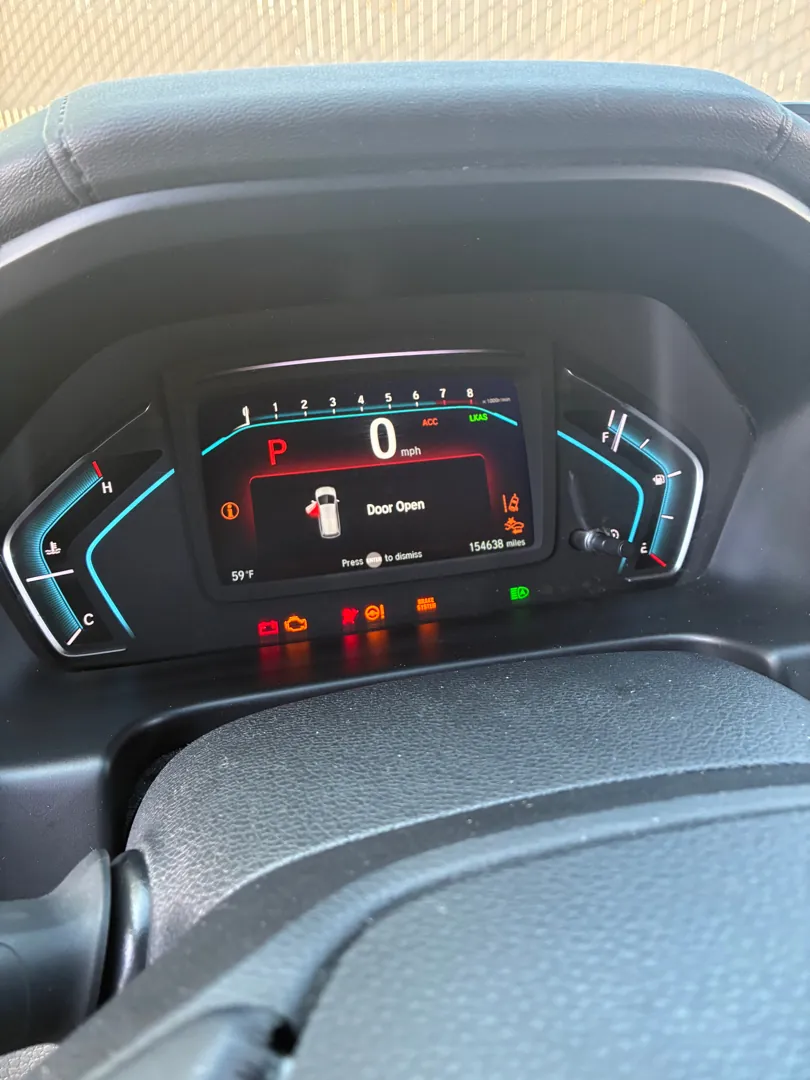
Digital instrument cluster of a minivan lit with a door open message and a row of warning indicators
A digital cluster will happily show you a dozen symbols and name none of the causes. That is what the scan tool is for.
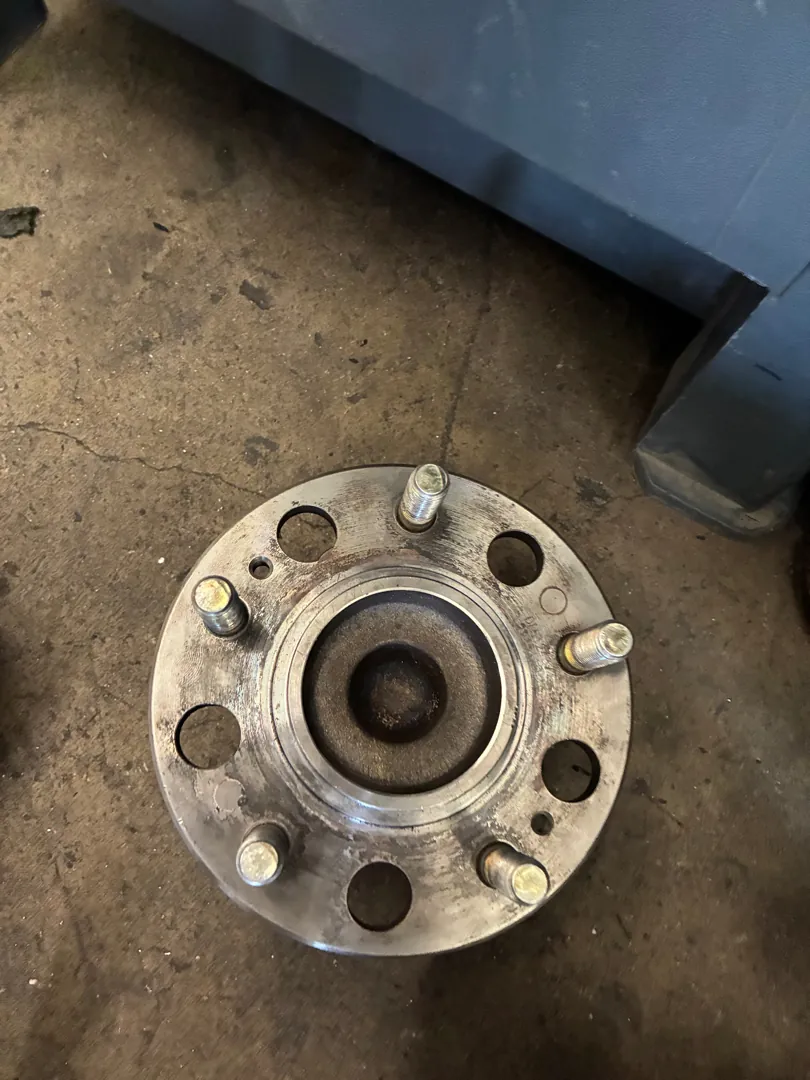
Wheel hub and bearing flange removed from a vehicle and photographed on the shop floor
The hub and bearing that came off. A bearing that howls at 40mph and goes quiet when you change lanes has told you which side it is on before we even lift the car.
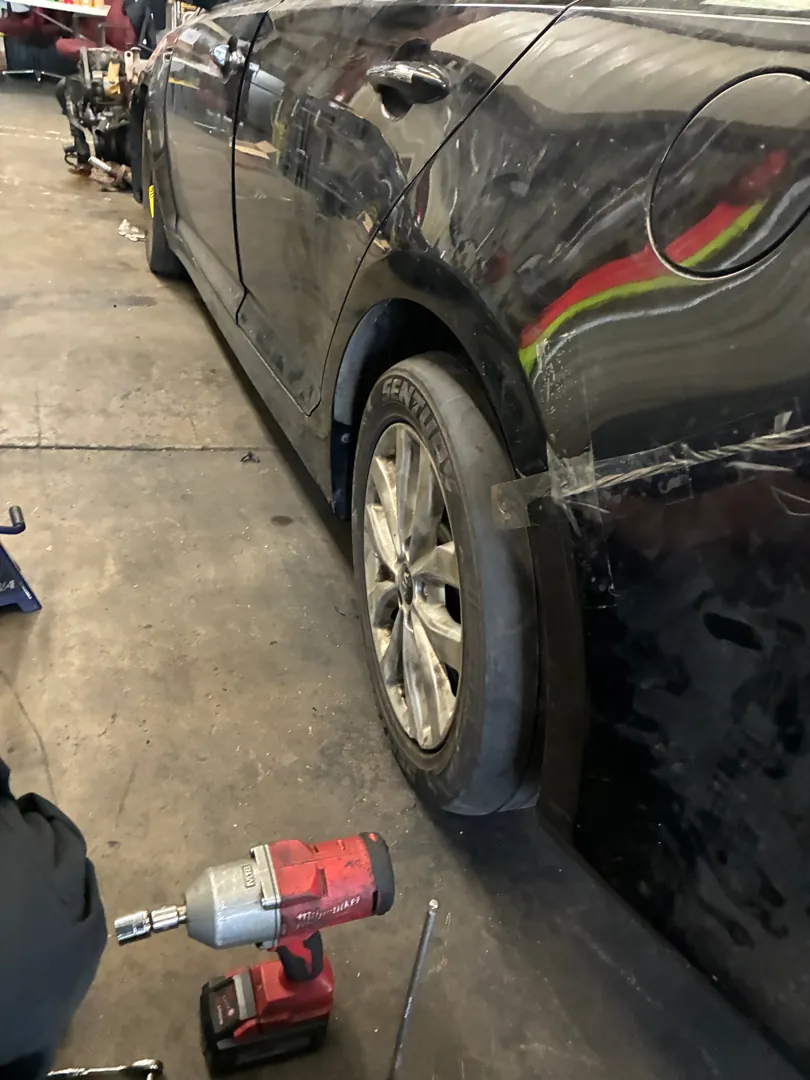
Sedan raised on jack stands with a cordless impact wrench on the ground during suspension work
Stands under the car, impact gun on the deck. Everything that happens in a shop bay happens here - it just happens where you parked.
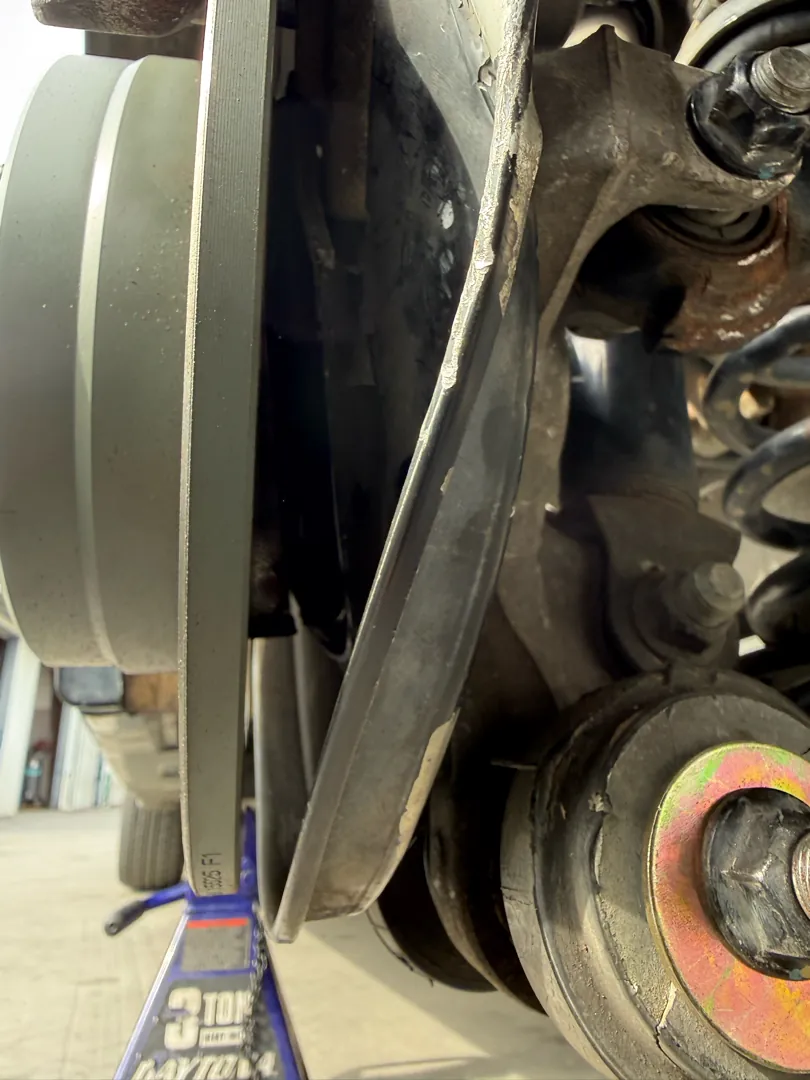
View inside a wheel well showing the brake rotor, strut and lower control arm with the wheel removed
Wheel off, and now you can actually see it: rotor face, strut body, control arm and the bushings that do the quiet failing.
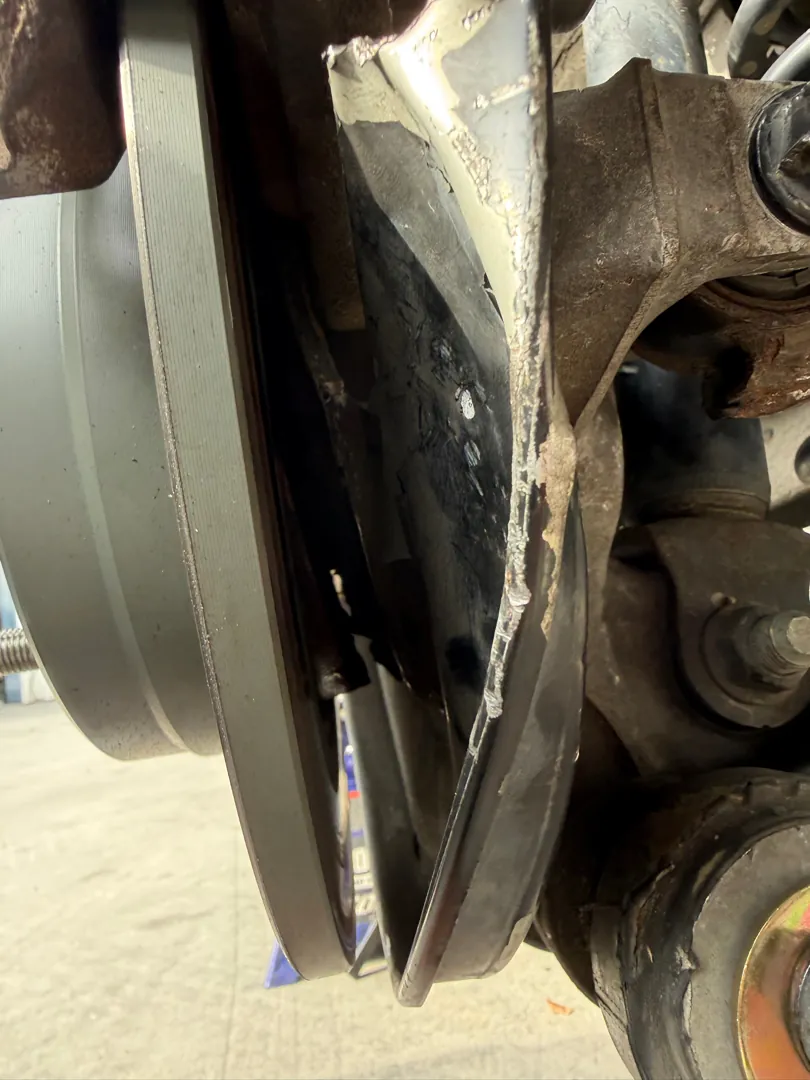
Close view of a lower control arm and bushing behind a brake rotor on a raised vehicle
Control arm bushing under the light. Perished rubber here is what turns a smooth car into a clunky one, and it never sets a code.
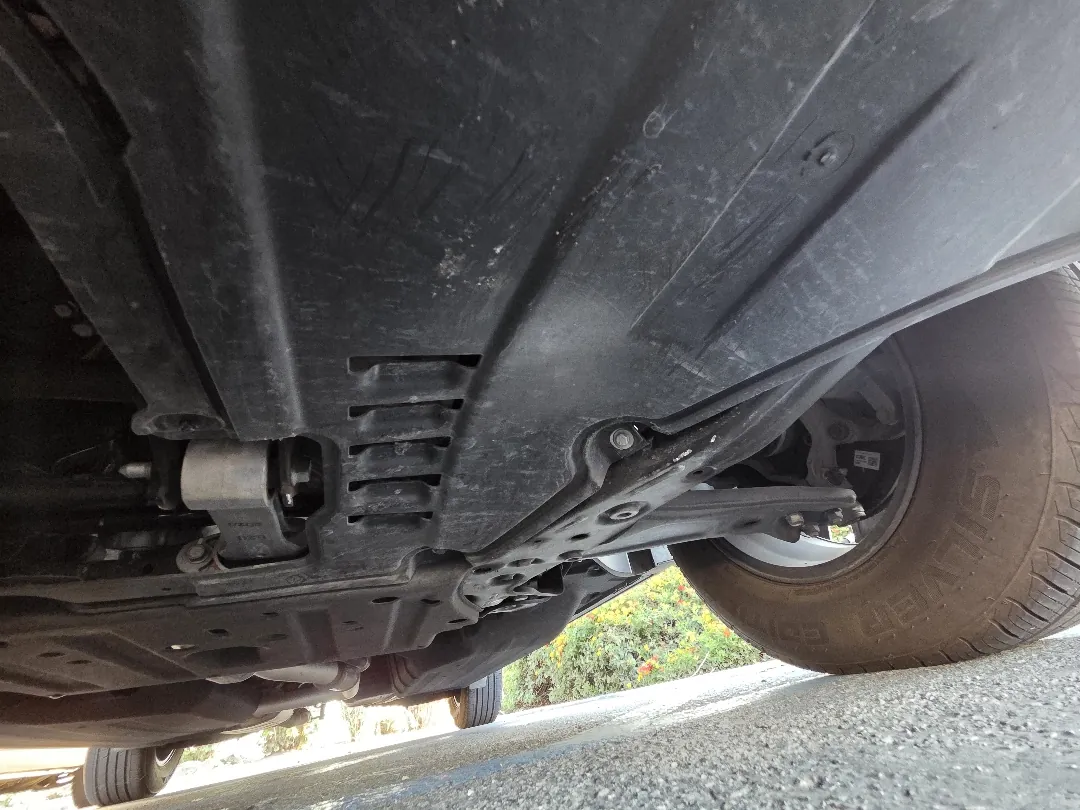
Underside of a car showing a plastic splash shield hanging loose below the engine bay
The dragging noise everybody describes as 'something under the car'. Usually it is exactly that - a splash shield with its clips torn out.
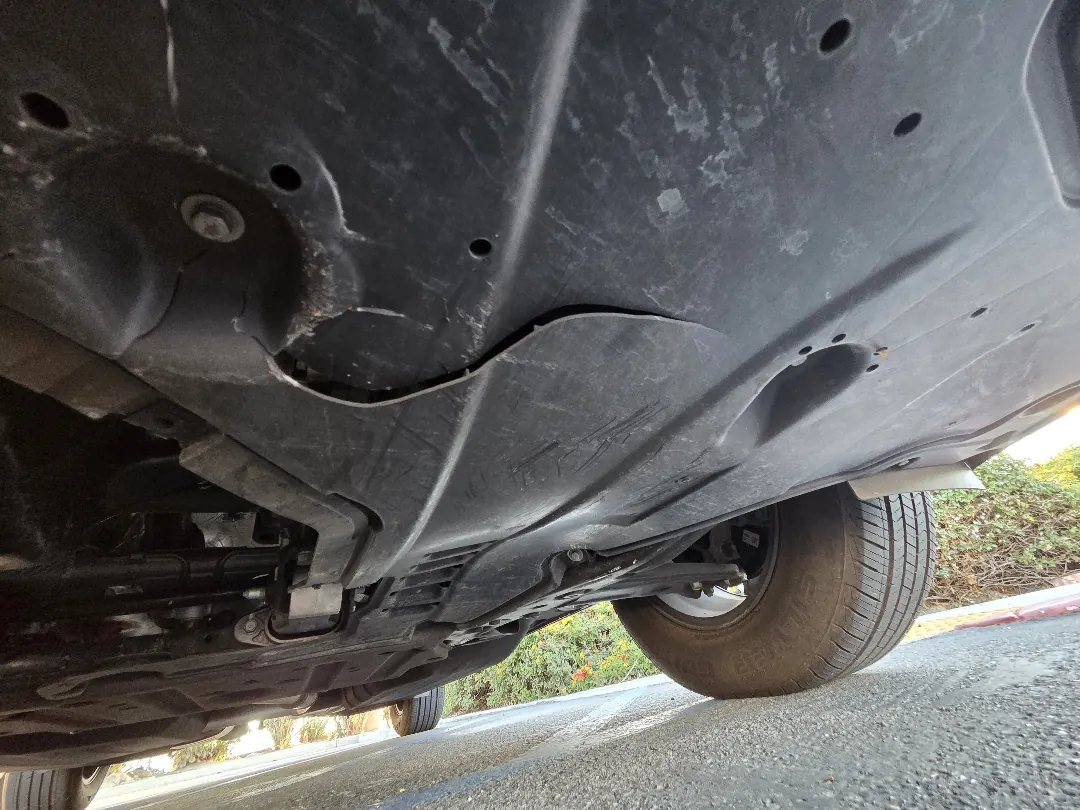
Detached engine undertray visible from beneath a vehicle with missing fasteners
Missing fasteners, torn mounting tabs. Cheap to fix while it is only a shield, expensive once it takes a sensor or a line with it.
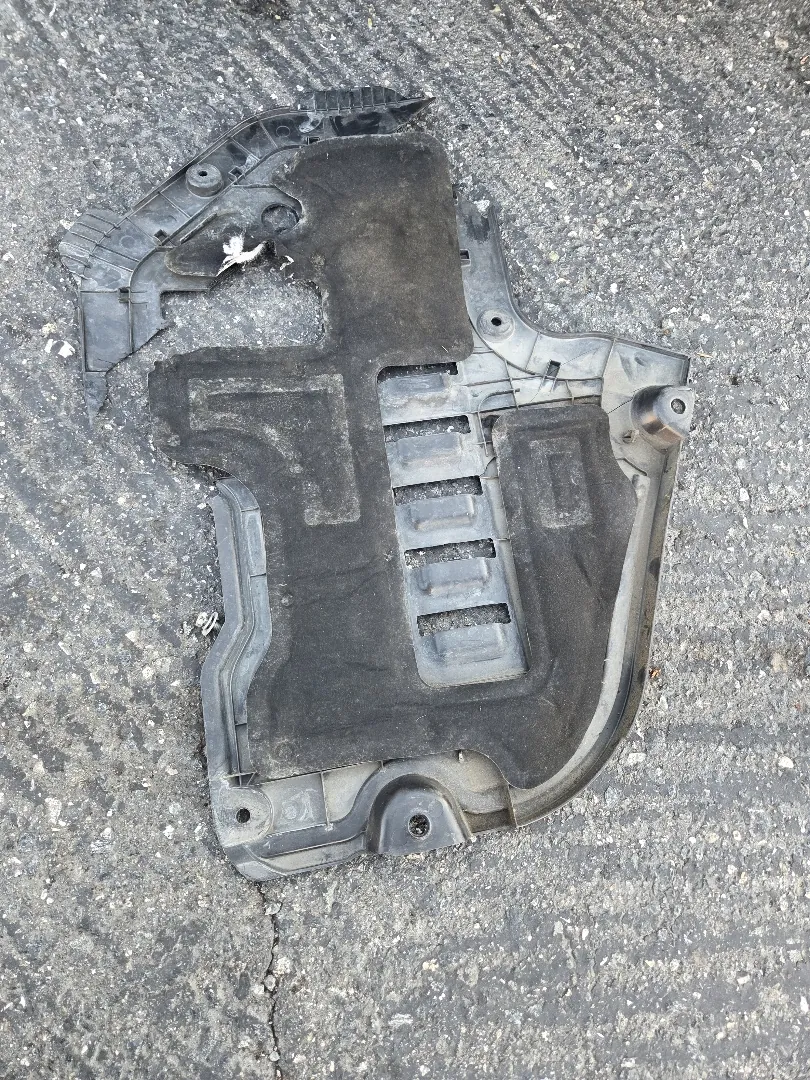
Engine splash shield removed from a vehicle and laid on the ground, coated in road grime
The shield off and on the floor. This is the part that road salt, slush and gravel spend all winter attacking on your behalf.
Underbody view of an exhaust pipe, heat shield and suspension components on a raised vehicle
Exhaust, heat shield and the suspension around it, all in one look. On a salted car this is where the first real rot shows up.
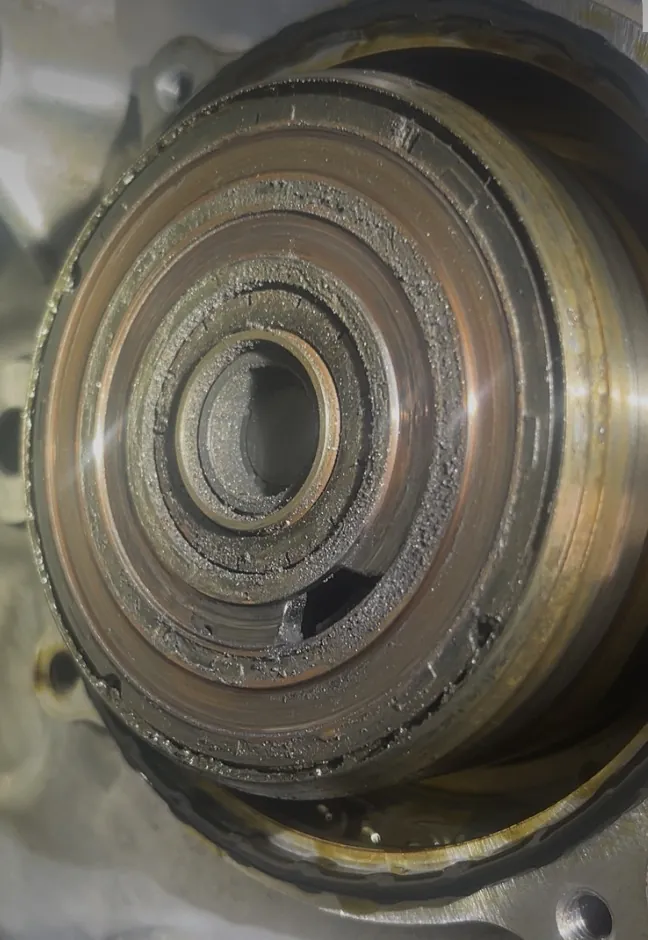
Macro view of a camshaft actuator bore in a cylinder head showing bearing surfaces and oil varnish
Camshaft actuator bore, opened up. The varnish you can see is what happens to an engine that went too long between oil changes - and it is why phasers rattle on cold start.
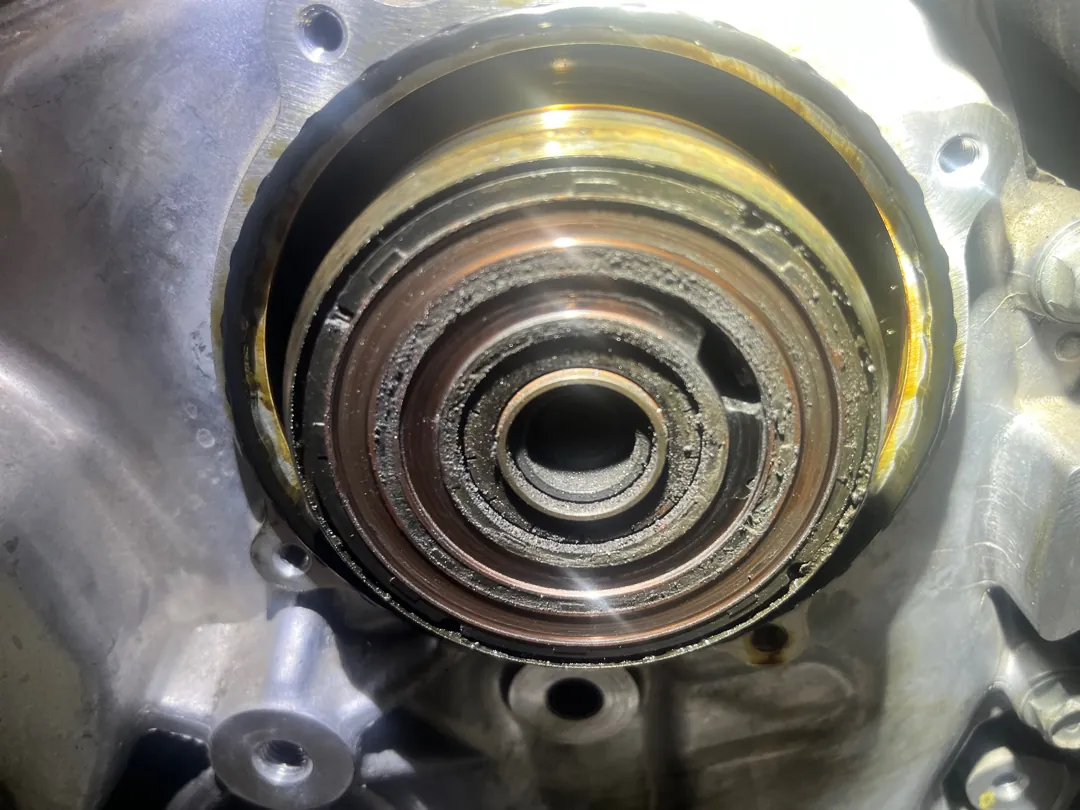
Close detail of a camshaft position actuator seated in an engine cylinder head
Same actuator, wider. This is the sort of picture you should get from any mechanic before they ask you to approve a four-figure repair.
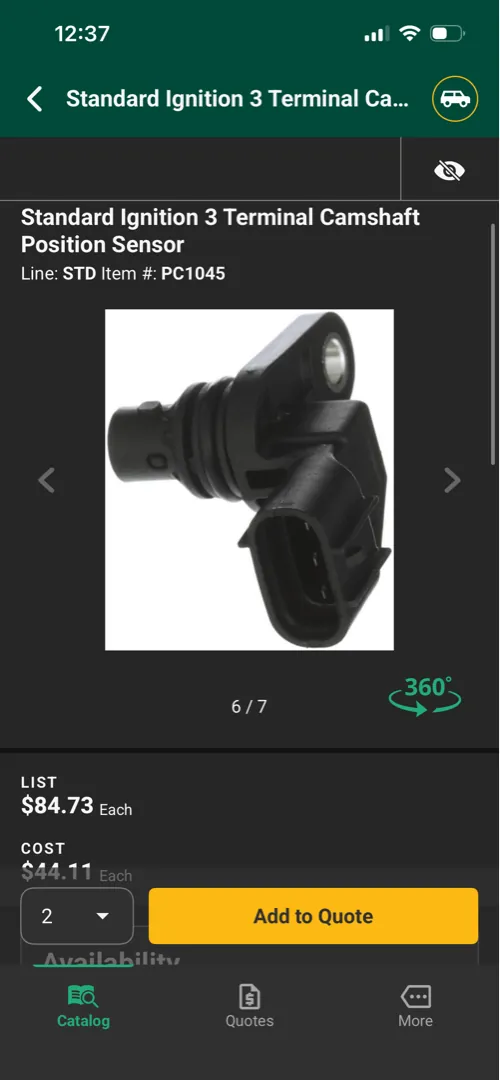
Parts supplier app showing a camshaft position sensor with a list price of $84.73 above the trade cost
List price and our trade cost, on the same screen. You pay a fixed markup over that cost figure, and we will turn the phone around and show you.
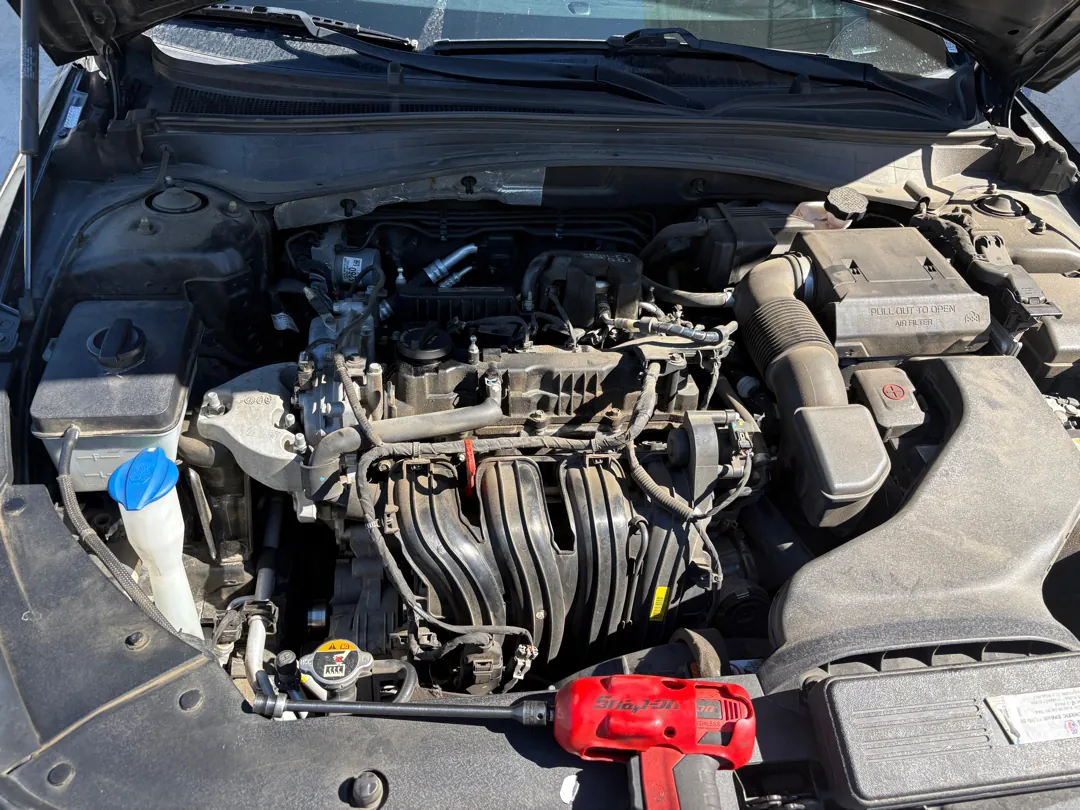
Engine bay with the ignition coil pack area exposed on top of the cylinder head during a spark plug job
Coils out, plug wells open. On a transverse V6 the back bank is the whole job - the front three take twenty minutes and the back three take two hours.
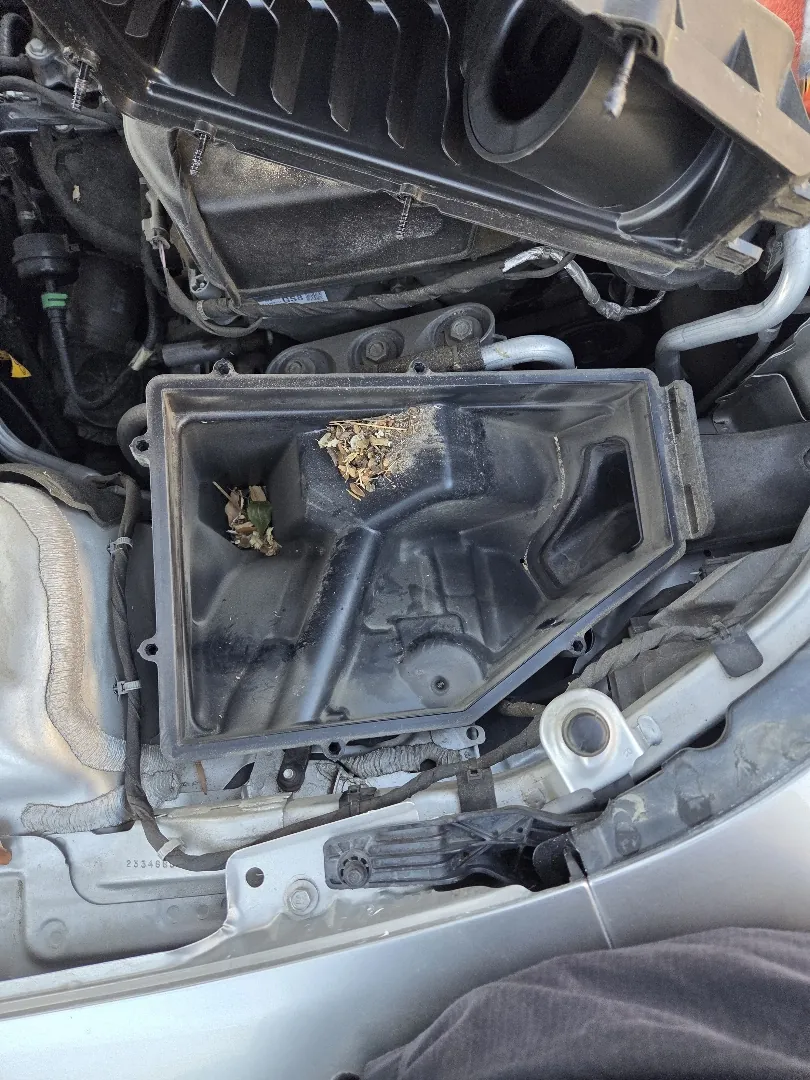
Open air filter housing revealing a dirty engine air filter with leaves and debris on its surface
Airbox opened during a drivability complaint. Leaves, grit and a filter that has not been out in years - and every one of those restricts the air the engine is metering.
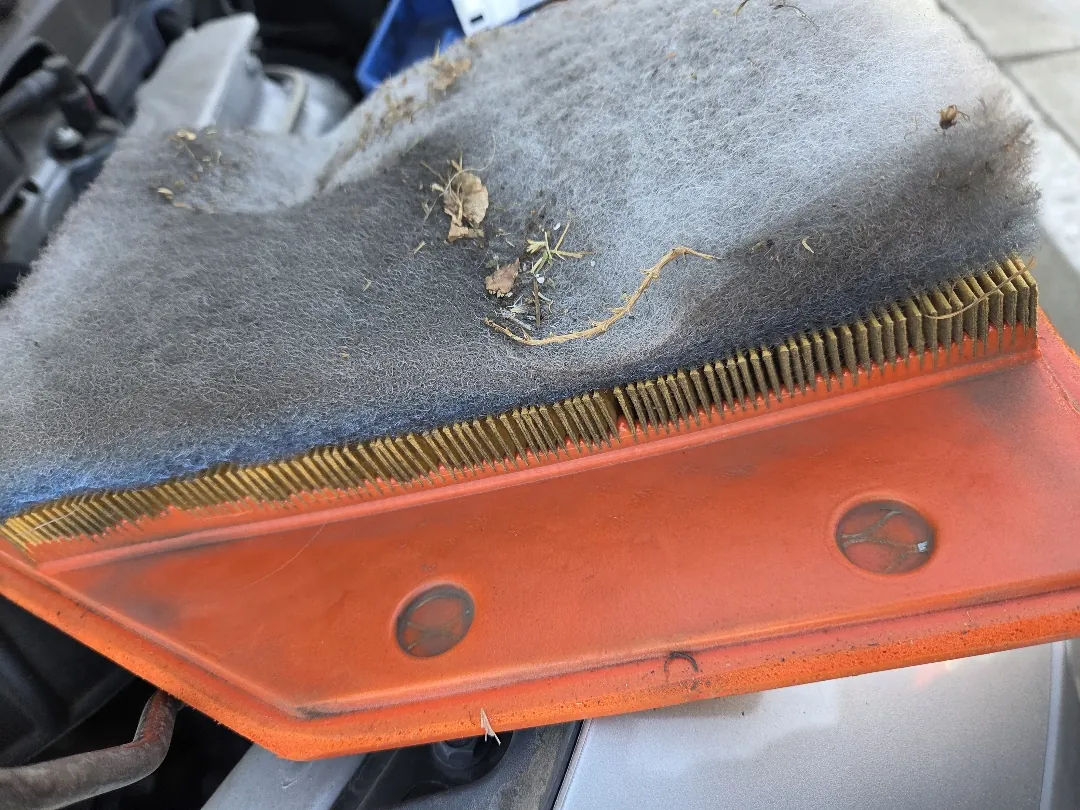
Close view of a clogged air filter pleated element covered with dirt and plant debris
The same filter out of the box. A five minute check that nobody charges for and almost nobody does.
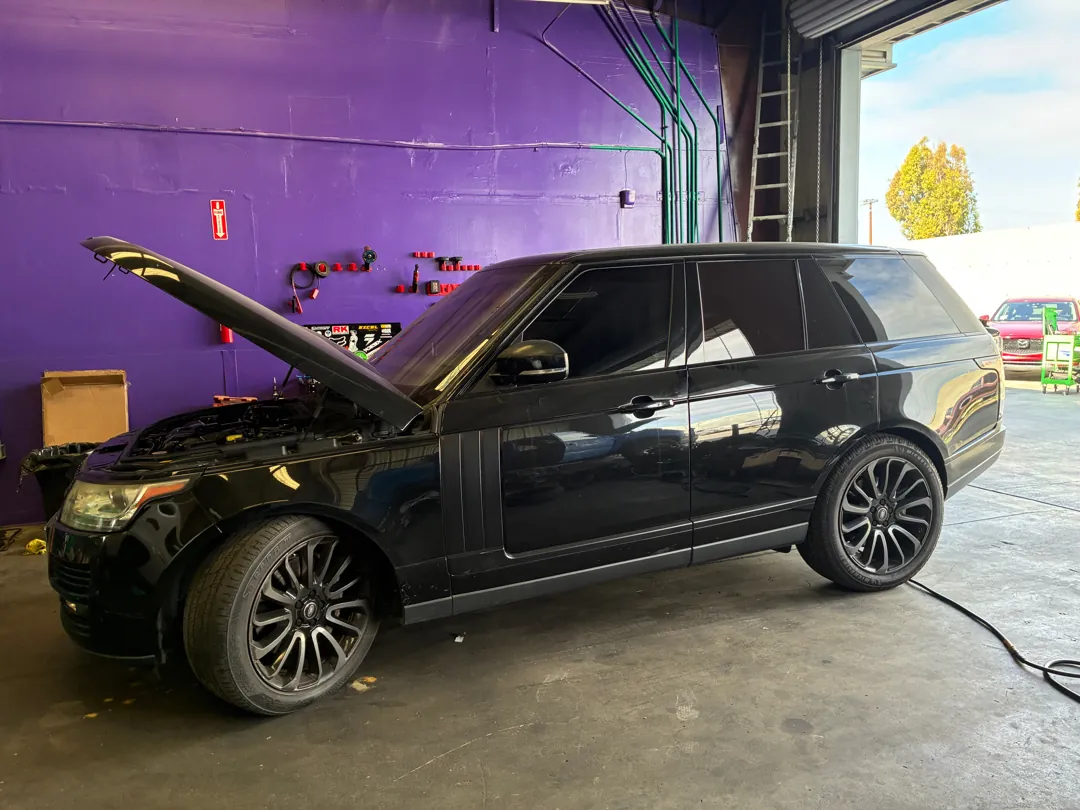
Black Range Rover with its hood raised inside a workshop bay during supercharger work
Some jobs need a lift, a full day and a roof. When yours is one of them we say so up front instead of finding out in your driveway at 6pm.
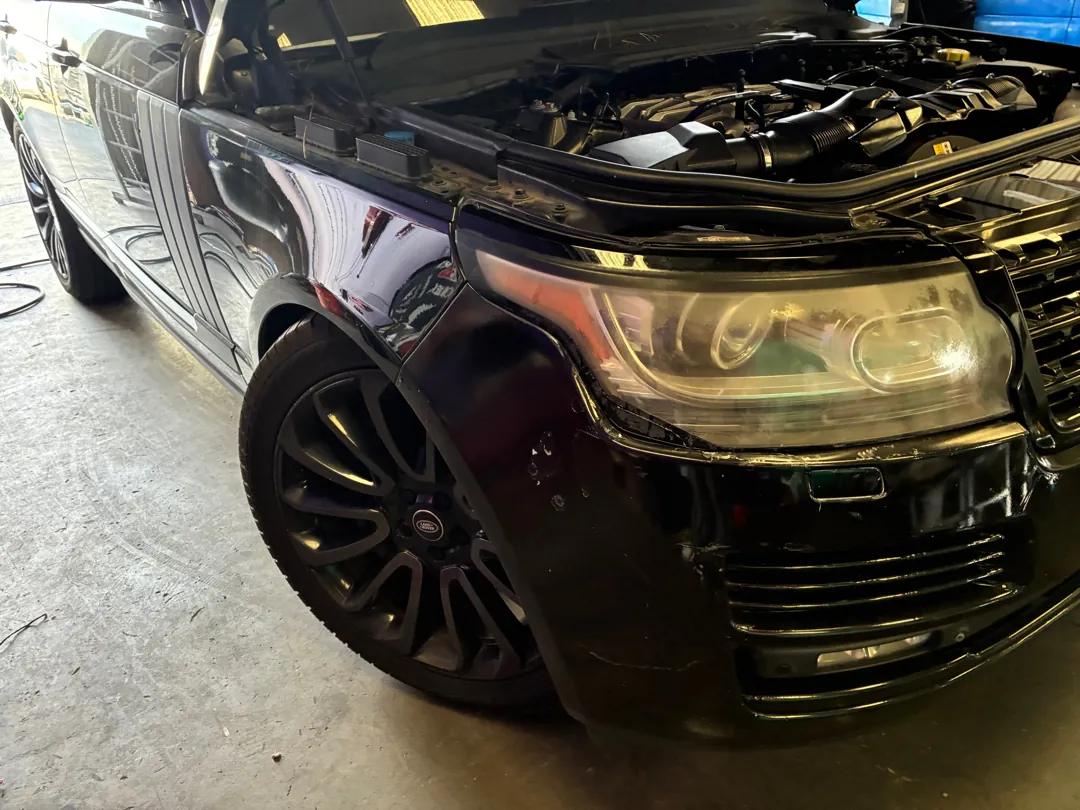
Front of a black Range Rover with the hood open in a workshop during an engine repair
Luxury European work is not off the table. It just needs the right scan tool, the right torque figures and honesty about what it will cost.
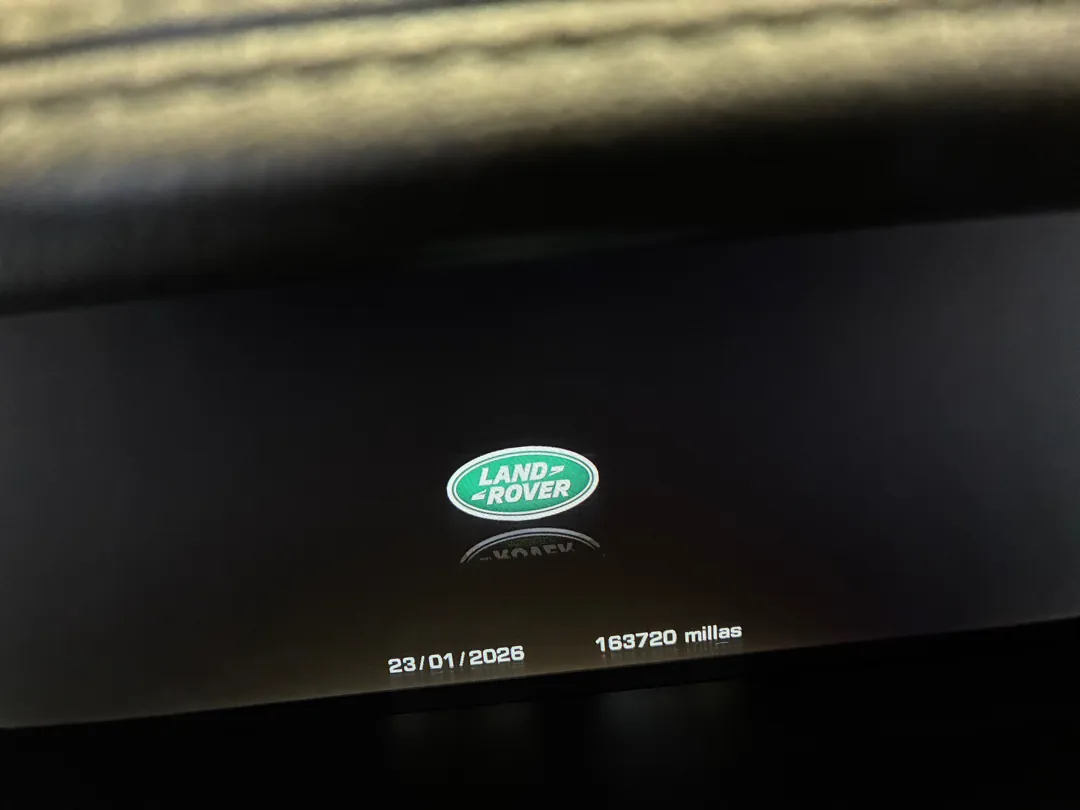
Vehicle infotainment screen showing a service record with a date and an odometer reading
Service history read out of the car itself. It is one of the fastest ways to find out whether the maintenance a seller promised actually happened.

Want your repair documented like this?

Every job gets photographed before, during and after, and the pictures are yours whether you ask for them or not.