Mobile auto repair · 7 days a week, 7am - 7pm $79 flat call-out, diagnostic included (414) 877-8092
Call (414) 877-8092Book a visitServicesCheck Engine & DiagnosticsBatteries, Starters & ChargingNo-Start & RoadsideBrake RepairRust & UndercarriageSuspension & SteeringOil ChangesCooling & HeatingTune-Ups & FiltersEngine RepairTransmissionPre-Purchase InspectionService AreaMilwaukeeWauwatosaWest AllisGreenfieldOak CreekFranklinGlendaleSouth Milwaukee & CudahyBrookfieldNew BerlinMenomonee FallsWaukeshaOur WorkPricesAbout
Home/ Services/Batteries & Starting

Batteries, Starters & Charging Systems

A battery loses roughly a third of its cranking power at 0°F while a cold engine needs more of it than at any other time of year - which is why half of Milwaukee's no-starts happen in about six weeks of the calendar.

At a glance

  • Battery, starter, alternator and the cables and grounds between them - tested before anything is sold to you
  • Resting voltage, cranking voltage and charging voltage are three separate tests and we run all three
  • Most batteries and alternators are done at your curb in under an hour
  • Free charging-system check bolted onto any other visit - just ask when you book

Why Milwaukee eats batteries

Two things kill a battery here, and they pull in opposite directions. Summer heat cooks the electrolyte and quietly destroys capacity you do not notice while it is warm. Then the first genuinely cold morning arrives, chemical reaction slows down, available cranking amps drop by around a third at zero degrees, engine oil thickens and the starter needs more current than it did in August. The battery that was fine on Sunday is dead in a driveway in Sherman Park on Monday.

That is why a battery almost never fails in the cold snap that gets blamed for it. It failed the previous July. February just presented the bill.

Tested, then replaced - in that order

Plenty of people get sold a battery when the battery was fine. The charging system, the starter, the main grounds and the parasitic draw from a module that will not go to sleep all produce the same symptom, and the last two are extremely common on a car that has spent years in road salt.

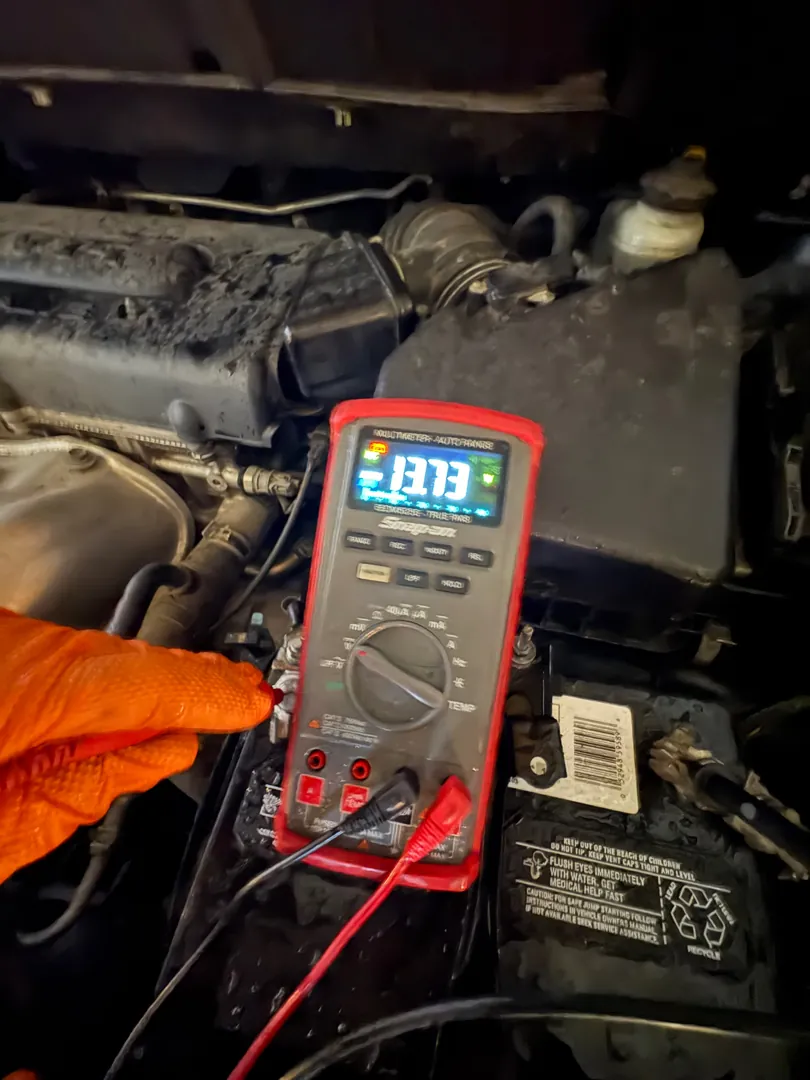
So we test. Resting voltage tells you state of charge. A load or conductance test tells you the battery's actual health. Voltage while cranking tells you whether the starter is dragging. Voltage with the engine running tells you whether the alternator is keeping up - and a reading in the low thirteens instead of the mid fourteens is an alternator on the way out, not a healthy one. If a parasitic draw is suspected we will put an ammeter in line and find the circuit rather than sell you a battery every eighteen months.

Starters, alternators and the awkward truth about access

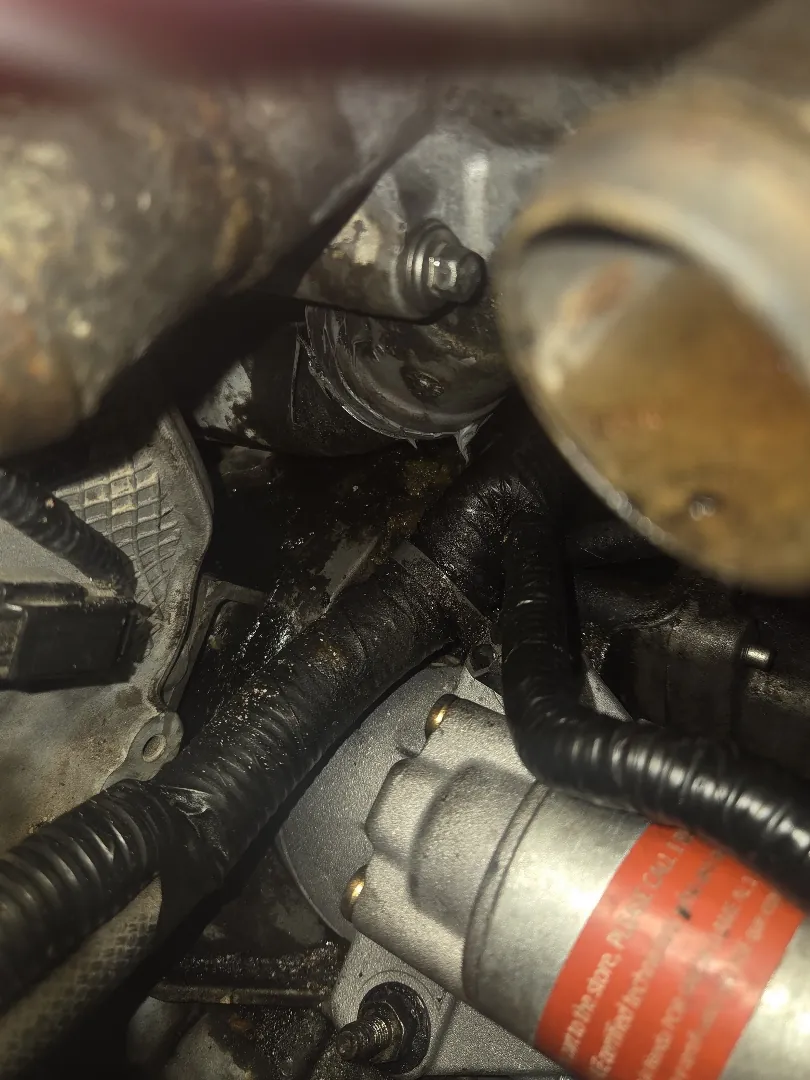
A starter is a cheap part attached to expensive labor. On some engines it is three bolts and forty minutes. On plenty of modern transverse V6s it lives under the intake manifold, and getting a hand and a socket onto it is most of the job. We quote your engine rather than an average, and we tell you the number before we start turning bolts.

Alternators are usually kinder, but the belt, the tensioner and the pulley are all worth checking while the covers are off. A charging fault is occasionally just a slipping belt, and finding that out for the price of a diagnostic is a good afternoon.

From the job book

What this work looks like

Real repairs, photographed on the job. These are jobs from our wider mechanic network rather than Milwaukee customers — we say so on every page rather than implying otherwise.
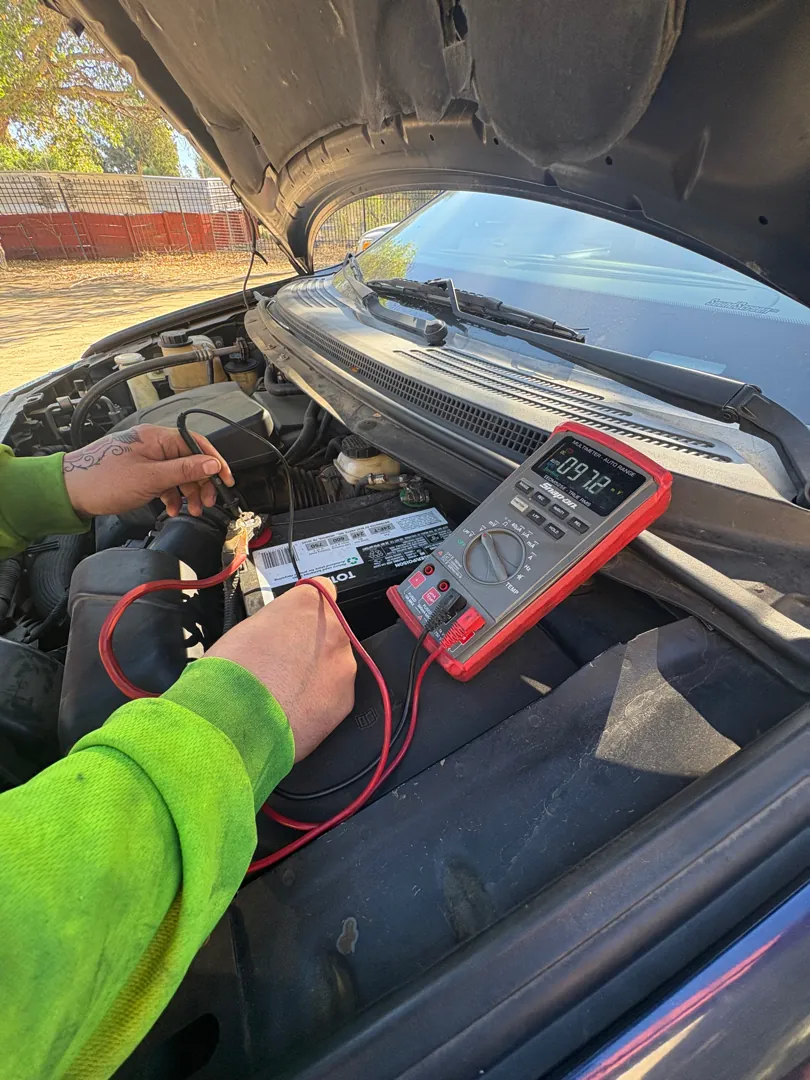
Mechanic in a high-visibility jacket testing battery voltage with a multimeter under an open hood
A meter on the posts before anything else. Resting voltage, cranking voltage and charging voltage are three different tests, and a parts-store 'free battery check' usually runs one of them.
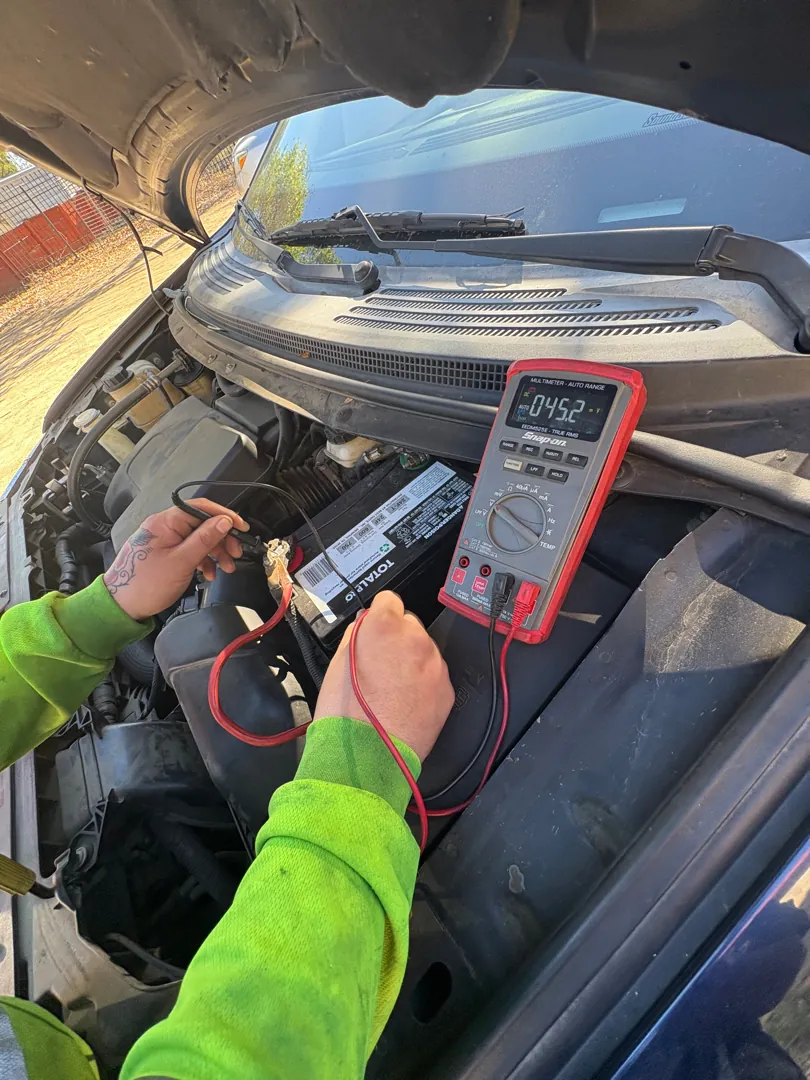
Close view of a digital multimeter connected to a car battery during a charging system test
Same battery, second reading with the engine running. If the number does not climb, the battery was never the problem.
Digital multimeter in an engine bay reading 13.13 volts during an alternator test
13.13 volts at the battery with the engine running. Healthy is roughly 13.5 to 14.7 - this one was charging, but not enough to keep up, which is exactly how an alternator dies slowly.
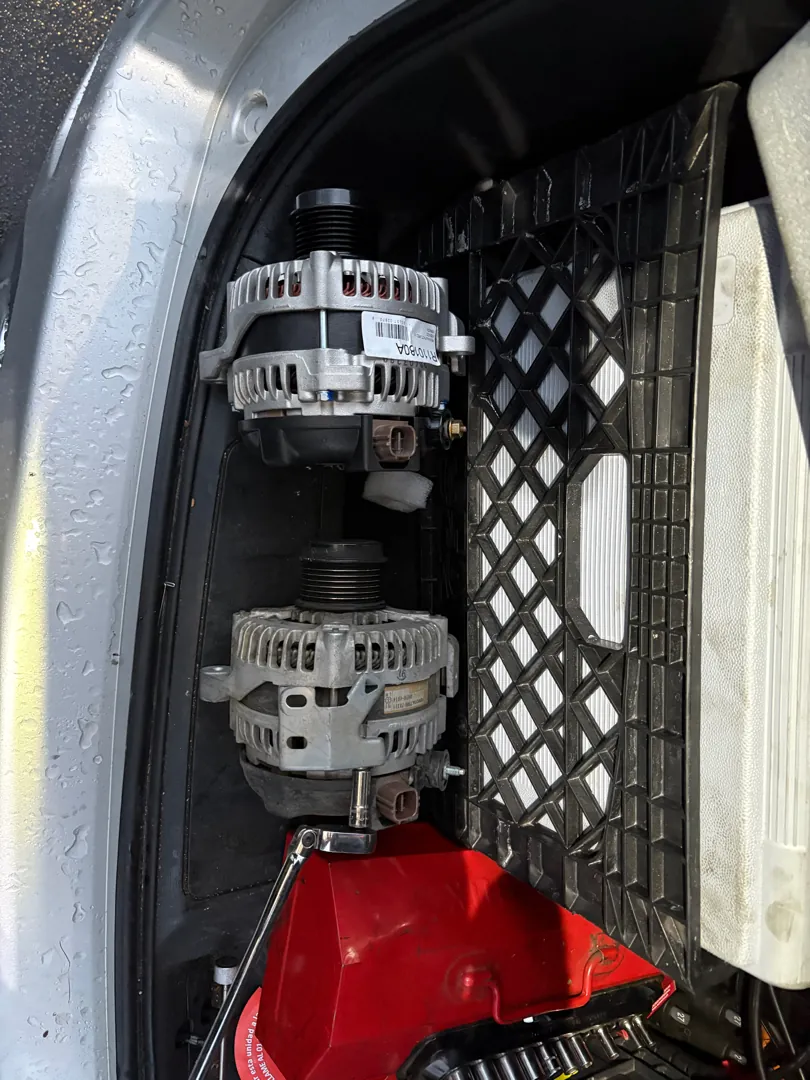
Two alternators side by side on a vehicle grille in the rain, one removed and one new
Old unit out, replacement in, photographed side by side in the rain. You get the picture of the failed part whether you ask for it or not.
Starter motor and solenoid with its power cable visible deep in a crowded engine bay
The starter, found. On plenty of modern engines it lives under the intake, and half the labor on the job is getting a hand and a socket to it.
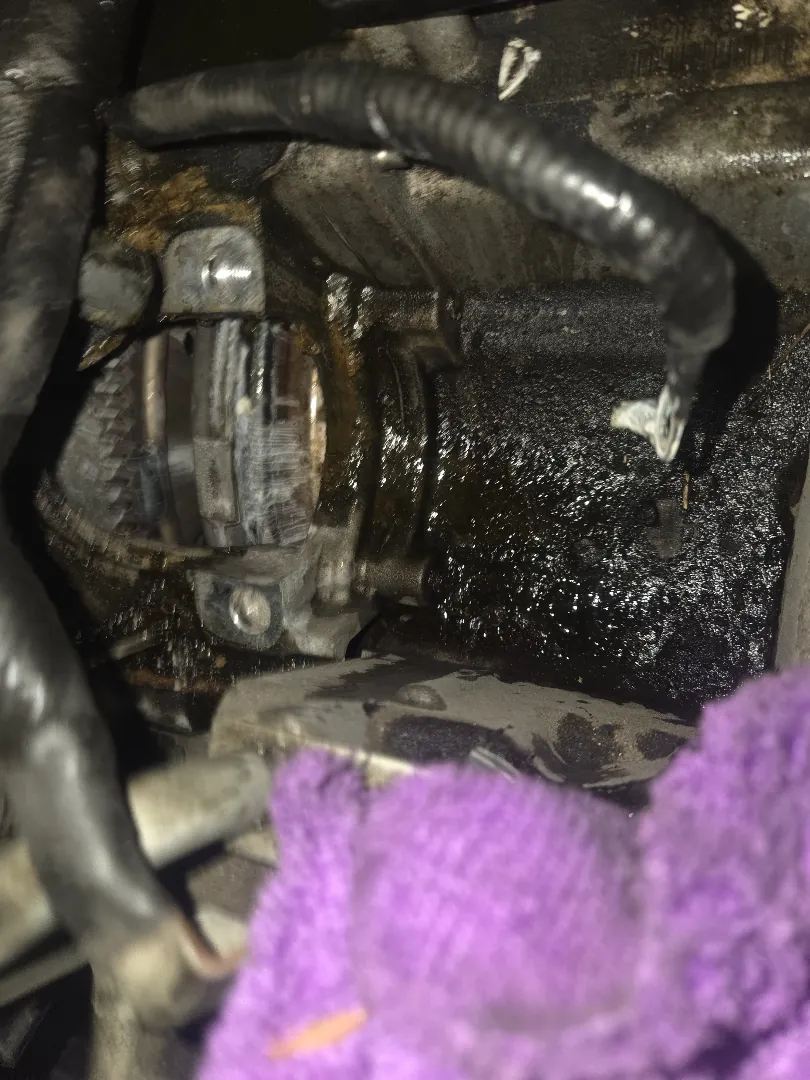
Engine bay with a protective towel laid over components during a starter replacement
A towel over the paint and the plumbing before the tools come out. Small thing. It is the difference between a repair and a repair plus a scratch.

Common questions

My car will not start in the cold. Is it definitely the battery?
Not definitely. A slow, labored crank points at battery or starter. Rapid clicking is usually low voltage. A strong crank with no fire is fuel, spark or a sensor, and the battery is innocent. We test rather than assume.
Can you replace a battery at my workplace parking lot?
Yes, and it is one of the most common things we do. Under an hour, we take the old battery away, and on most cars the radio presets and the idle relearn are handled before we leave.
Do I need a specific battery for a start-stop car?
Yes. Start-stop vehicles need an AGM or EFB battery and many need it registered to the charging system afterwards. Fitting a conventional battery to one of these will kill it in a year. We register them.
Do you sell block heaters?
We can fit one if your engine has the provision, and on an older diesel or a car that lives on the street it is money well spent. On a healthy modern gas engine with a good battery it is usually not necessary.

Something wrong with the car? Tell us where it is parked.

$79 flat call-out, diagnostic included, 7 days a week, 7am - 7pm. If you decline the repair that is the whole bill.