What happens if you don't change brake fluid?
It soaks up water from the air. The water lowers its boiling point and rusts the system from the inside. First you get a softer pedal on long hard stops. Later come seized calipers, a leaking master cylinder or a sticking ABS valve.
Most brake fluid is glycol based, and glycol pulls in water. The federal standard for brake fluid, FMVSS 116, even makes every bottle carry a warning to keep it tightly closed so it doesn't absorb moisture. The same rule sets two boiling points for each grade. One is for new fluid. The other is for fluid that has taken on water in a lab test, at about 3.7% water.
| Fluid | New | Wet | Drop |
|---|---|---|---|
| DOT 3 | 401 F (205 C) | 284 F (140 C) | 117 F |
| DOT 4 | 446 F (230 C) | 311 F (155 C) | 135 F |
| DOT 5 and 5.1 | 500 F (260 C) | 356 F (180 C) | 144 F |
Why does boiling matter? Hard braking heats the caliper, and the caliper heats the fluid. Water in the fluid can flash to vapor. Vapor squeezes, and liquid doesn't. So the pedal goes soft right when you need it most. A 2021 study in Periodica Polytechnica notes that brake discs can pass 530 C in a run of hard stops.
The second problem is slower. The water rusts steel and attacks the parts the fluid touches. FMVSS 116 tests every fluid for corrosion on steel, cast iron, aluminum, brass and copper. The Caban study lists corroded cylinders and damaged master cylinder seals among what old fluid can cause.
How quickly does brake fluid go bad?
Faster than most people think. In a study of 32 cars tested a year apart, the fluid's boiling point fell about 16 C (29 F) on average in one year. The number of cars below 180 C went from 2 to 8.
That study is the Caban team's work, published in 2021. They tested the same 32 cars in November and December of 2017, then again a year later. The cars were built from 2000 to 2011. The researchers found boiling point a better test than water percentage, since every car's boiling point moved while the water readings barely did. No car in the second round had fluid above 260 C.
Mileage mattered too. More miles in the year meant a bigger drop.
What Old Fluid Breaks, and What Each Part Costs
Soft pedal first. Then parts. Rust inside a caliper can stick the piston, so the brake drags or the car pulls. A worn master cylinder can let the pedal sink slowly at a light. On ABS cars, the valves in the ABS unit sit in the same fluid. FenderBender reported that NHTSA began looking at ABS parts in the late 1990s and that NIST put out a report on ABS corrosion in 1998.
The numbers below come from line items on our wider mechanic network's repair tickets, priced at our Milwaukee rates. Brake fluid on 35 tickets had a median price of $11.99. Eight flush and bleed jobs took one hour on the car, all but one. Five caliper parts ran $94.99 to $170.40. Two master cylinders ran $177.50 and $255.30.
| Job | Time on the car | Parts | Mobile price |
|---|---|---|---|
| Brake fluid flush | About 1 hour | Fluid, about $12 | About $240 |
| One seized caliper | 1.5 to 2 hours | Caliper $95 to $170, plus fluid | $410 to $560 |
| Master cylinder | 2 to 2.5 hours | Master $178 to $255, plus fluid | $565 to $720 |
| ABS unit | Varies by car | Varies by car | Price after a scan |
Change now or fix later
Mobile visit prices in Milwaukee, scale to $800.
How much does a brake fluid flush cost in Milwaukee?
About $240 on a mobile visit at our prices, as a worked example. That's the $150 call out, 30 more minutes of labor at $75, and about $12 of fluid. A flush that waits too long can turn into a caliper or master cylinder job.
Those numbers come from our price list. The $150 call out covers the trip, a full scan and the first 30 minutes. Labor after that is $150 an hour in 30 minute steps. A truck with four rusted bleeder screws can take longer. A bleeder that snaps adds time.
Wisconsin gives you cover on any brake quote. Under ATCP 132, a shop can't do a repair you didn't authorize. A job that may pass $50 needs a written repair order first.
Is a brake fluid flush really necessary?
Yes, on your maker's schedule or when a test says so. Honda says every 3 years no matter the miles. Some makers only say to inspect it. A copper test strip or a boiling point tester settles the question for your car.
Makers don't agree, and that's where the confusion starts. Cars.com (August 13, 2023) pulled a few schedules side by side.
| Car | Brake fluid schedule |
|---|---|
| 2011 Honda Civic | Replace every 3 years, no matter the miles |
| 2012 Nissan Leaf | Every 2 years or 30,000 miles, or every year under severe use |
| 2012 Toyota Camry | No change listed through 120,000 miles, inspect it |
The Honda line is from the 2011 Civic owner's manual. Check yours, since a 2026 schedule can differ from a 2012 one.
When the book is vague, test. In May 2005 the Motorist Assurance Program set a rule that fluid with more than 200 ppm of copper should be replaced, per FenderBender. Copper comes off the lines once the inhibitors are used up, so the strip reads rust before you can see it. Cars.com puts simple fluid testers under $10, though they may not be certified for accuracy.
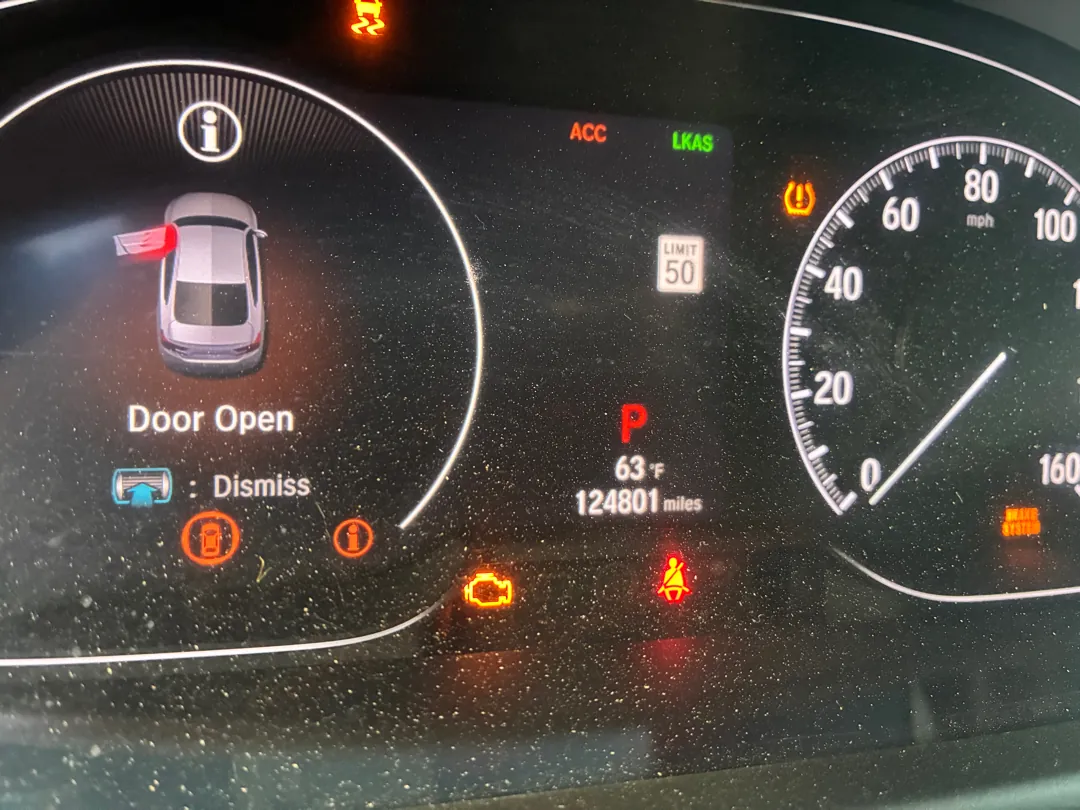
Milwaukee Has No Brake Check at Renewal
Plenty of drivers assume someone looks at the brakes along the way. In Milwaukee County, nobody does. The state's emissions program covers Milwaukee and six other southeast counties, and the test usually just reads the car's computer, per the Wisconsin Legislative Council (July 2026). The brief does say an inspector must refuse a car that's leaking fluid. That's the only brake hint in the whole visit.
Salt makes it worse. Road salt eats steel brake lines from the outside, and wet fluid eats them from the inside. Our brake line cost guide covers the outside half. A line that rusts both ways fails sooner, and that's a bigger bill than a flush.
Asked and Answered
What color should brake fluid be?
New DOT 3, DOT 4 and DOT 5.1 fluid runs from clear to amber. DOT 5 silicone fluid is purple. Dark brown fluid is old, but color alone can't tell you how much water is in it.
The colors come straight from FMVSS 116. Fresh fluid in a clear bottle looks like light honey. Old fluid looks like weak coffee.
How do I check my brake fluid?
Check the level against the MIN and MAX marks on the reservoir with the engine off. Then test the fluid itself with a copper strip or a boiling point tester. The level tells you about leaks and pad wear. The test tells you about age.
Wipe the cap before you open it, so dirt doesn't drop in. Close it fast, since the open reservoir is pulling in air the whole time.
Can I drive with low brake fluid?
Not far. Low fluid usually means worn pads or a leak. If the pedal feels soft or the brake light is on, park it and get it checked where it sits.
Don't just top it off and forget it. The level drops as pads wear, so a low reservoir may be your pads talking.
Does changing brake fluid improve braking?
In everyday driving you may not feel a change. Fresh fluid gives back the boiling margin for long or hard stops, and it puts fresh rust inhibitors back in the lines.
The Caban study found no car with fluid above 260 C after a year in service. Even a good fluid gives up some margin every season.
Can I change brake fluid myself?
Yes, if you have the tools and a helper to work the pedal. Use the type printed on the reservoir cap, keep the bottle sealed between pours, and never mix DOT 5 with the others.
FMVSS 116 makes DOT 5 silicone fluid purple so it's easy to spot. Most cars on the road use DOT 3 or DOT 4.
Get the Fluid Tested Before It Costs a Caliper
We come to the car, at home, at work or on the street. The $150 call out covers the trip, a full scan and the first 30 minutes. That's time enough to test the fluid and look at the pads and lines. If the fluid is fine, we'll say so. See mobile brake repair, check our prices, or call (414) 877-8092.
Numbers From
| What we cited | Where it came from |
|---|---|
| Boiling points new and wet, keep the bottle closed, test metals, fluid colors | 49 CFR 571.116 (FMVSS 116), Cornell Legal Information Institute |
| 32 cars, boiling point fell about 16 C a year, 2 to 8 cars under 180 C, discs past 530 C | Caban et al., Periodica Polytechnica Transportation Engineering, 2021 |
| Copper over 200 ppm means replace, MAP rule of May 2005, NIST ABS corrosion report 1998 | FenderBender, Bob Chabot |
| Leaf, Camry schedules, testers under $10 | Cars.com, August 13, 2023 |
| Replace brake fluid every 3 years | Honda 2011 Civic owner's manual |
| Emissions test reads the computer, refuses leaking cars | Wisconsin Legislative Council issue brief, July 2026 |
| Authorization and a written order over $50 | Wisconsin Admin. Code ch. ATCP 132 |
| Fluid $11.99 median on 35 tickets, labor hours and caliper and master cylinder parts | Our wider mechanic network's repair ticket line items, November 2026 |
| $150 call out, $150 an hour labor | Our price list |